
Marrakech to Merzouga Desert Camp: The Complete Journey Guide
If you're dreaming of sleeping under the stars in the heart of the Sahara Desert, you've likely found yourself planning a journey from Marrakech to Merzouga. This isn't just any road trip—it's a transformative passage through Morocco's most stunning landscapes. Whether you're a first-time visitor or a seasoned traveler, this comprehensive guide will help you navigate every aspect of getting from Morocco's vibrant red city to the golden dunes of Erg Chebbi.
The journey from Marrakech to Merzouga is approximately 465 kilometers (289 miles) and represents one of Morocco's most iconic travel routes. What makes this trip special isn't just the destination—it's the incredible scenery and experiences you'll encounter along the way. In this guide, we'll walk you through everything you need to know to make the most of your Marrakech to Merzouga desert camp adventure.
Understanding the Geography and Route
Before you begin your journey, it's helpful to understand the geography of Morocco and how the route unfolds. Marrakech sits in Morocco's center, at the foothills of the Atlas Mountains. Merzouga, by contrast, sits at the eastern edge of the country, on the border with Algeria, at the base of Erg Chebbi—one of the Sahara's most dramatic sand sea formations.
The most popular and scenic route follows this general path: Marrakech → Atlas Mountains → Kasbah Ait Benhaddou → Dades Valley → Todra Gorge → Erfoud → Merzouga. This isn't the shortest possible route, but it's the one that reveals Morocco's incredible diversity and the one most travelers choose when they have the time.
The Direct vs. Scenic Route
There are technically two ways to approach this journey. The direct route from Marrakech to Merzouga takes roughly 10-12 hours of driving and covers the distance more quickly. However, we'd strongly recommend against this approach if you have any flexibility in your itinerary.
The scenic route takes 2-3 days and transforms your journey into an adventure. You'll pass through the Atlas Mountains, visit the UNESCO World Heritage site of Ait Benhaddou, explore dramatic valleys and gorges, and gradually acclimate to the desert environment. This multi-day approach also gives you time to adjust to the changing landscape and prepare physically and mentally for your time in the desert.
Planning Your Travel Timeline
The ideal journey from Marrakech to a luxury desert camp in Merzouga spans 2-3 days, and we can't stress enough how worthwhile this extended timeline is.
The Two-Day Journey
If you have limited time, a two-day itinerary works like this:
- Day 1: Marrakech to the Dades Valley or Todra Gorge (approximately 8-9 hours of driving)
- Day 2: Dades/Todra to Merzouga (approximately 3-4 hours of driving, arriving in the late afternoon)
This compressed schedule gets you to Merzouga efficiently while still incorporating a major highlight en route.
The Three-Day Journey (Recommended)
The three-day approach is considerably more enjoyable and allows you to experience Morocco's diverse landscapes without feeling rushed:
- Day 1: Marrakech to Kasbah Ait Benhaddou (approximately 6-7 hours)
- Day 2: Ait Benhaddou to Dades Valley or Todra Gorge (approximately 5-6 hours)
- Day 3: Dades/Todra to Merzouga (approximately 3-4 hours)
This pacing allows you to stop frequently, enjoy meals at leisure, explore each location properly, and arrive at your desert camp with energy and enthusiasm.
Getting Around: Transportation Options
Your choice of transportation significantly impacts your experience. Let's explore your main options.
Guided Tours from Marrakech
Many travelers choose to book an organized Marrakech to Merzouga desert camp tour. These tours typically include transportation, accommodations, meals, and guided experiences at each stop. The advantages include:
- Professional drivers who know the roads intimately
- Pre-arranged accommodations and meals
- Cultural insights and local knowledge
- No stress about navigation or logistics
The disadvantage is that you're following a set itinerary, which may not align perfectly with your preferences or travel pace.
Private Driver or Car Rental
Renting a vehicle or hiring a private driver gives you maximum flexibility. You can stop whenever something catches your eye, adjust your pace, and create your own itinerary. However, this requires:
- Valid international driving permit (if driving yourself)
- Navigation skills or a good GPS system
- Comfort driving in unfamiliar conditions
- Understanding of Moroccan road conditions and driving customs
If you hire a private driver, expect to pay approximately 1,200-1,800 MAD (roughly $120-180 USD) per day for a comfortable vehicle. This often works out economically for groups of 3-4 people.
Group Shared Tours
Many guesthouses and tour operators in Marrakech offer shared group tours where you join other travelers. These are budget-friendly (typically 800-1,200 MAD per person) and a great way to meet fellow travelers.
What to Expect: The Route Breakdown
Let's walk through the major stops and highlights you'll encounter on your journey to Merzouga.
Leaving Marrakech: The Atlas Mountains Crossing
Your journey begins with an ascent into the High Atlas Mountains. The route winds through Berber villages and dramatic mountain passes, with the landscape shifting from arid foothills to lush valleys with terraced farming. The Tizi n'Tichka Pass, at 2,260 meters (7,415 feet), is the highest point on this route and offers spectacular views.
This section takes approximately 2-3 hours from Marrakech's center. Stop in one of the small villages for tea or a light meal—the hospitality of mountain Berbers is legendary, and these breaks provide wonderful opportunities for cultural connection.
Kasbah Ait Benhaddou: A UNESCO World Heritage Stop
About 6 hours from Marrakech, you'll encounter Ait Benhaddou, one of Morocco's most iconic sites. This fortified village, with its distinctive earthen architecture, has been a UNESCO World Heritage site since 1987. The kasbahs (fortified buildings) date back centuries, though the settlement has been inhabited for much longer.
Plan to spend 1-2 hours here. Walk through the winding streets, climb to the upper levels for panoramic views, and visit one of the family-run guesthouses for fresh tagine. The light here is extraordinary in late afternoon, making it a photographer's dream.
Dades Valley and Todra Gorge: Nature's Dramatic Displays
Beyond Ait Benhaddou, the landscape becomes increasingly dramatic. The Dades Valley stretches for 50 kilometers with stunning red sandstone formations, particularly the "Monkey's Fingers" (Doigts des Singes), distinctive rock formations that resemble their namesake.
The Todra Gorge, to the south, is a dramatic limestone canyon with 300-meter (985-foot) walls rising vertically from a river. These attractions are roughly 4-5 hours from Ait Benhaddou and make excellent places to break your journey or spend the night before heading to Merzouga.
Erfoud: Gateway to the Sahara
Erfoud marks your transition from mountain and valley landscapes to the desert proper. This town serves as a regional hub and is where the landscape shifts noticeably—vegetation becomes sparse, the air feels different, and anticipation builds as you sense you're truly nearing the Sahara.
Many travelers spend the night in Erfoud before the final push to Merzouga, which is only 50 kilometers away. The town has several good guesthouses and hotels, and the local restaurants serve excellent Moroccan cuisine.
Arriving in Merzouga: What to Know
Merzouga is a small settlement of approximately 400 people, located at the edge of Erg Chebbi, one of the largest sand seas in the Sahara. When you arrive—likely in the late afternoon—you'll be struck by the vastness of the landscape. The dunes stretch endlessly in every direction, and the quality of light here is unlike anywhere else.
The Final Stretch
The last stretch of road into Merzouga actually feels more like a track than a highway, particularly in the final 5-10 kilometers. Your driver will navigate carefully over sandy terrain. If you're booking a Merzouga camp transfer as part of a pre-arranged package, your hosts will likely coordinate a meeting point and the final transport to your accommodation.
First Impressions of Erg Chebbi
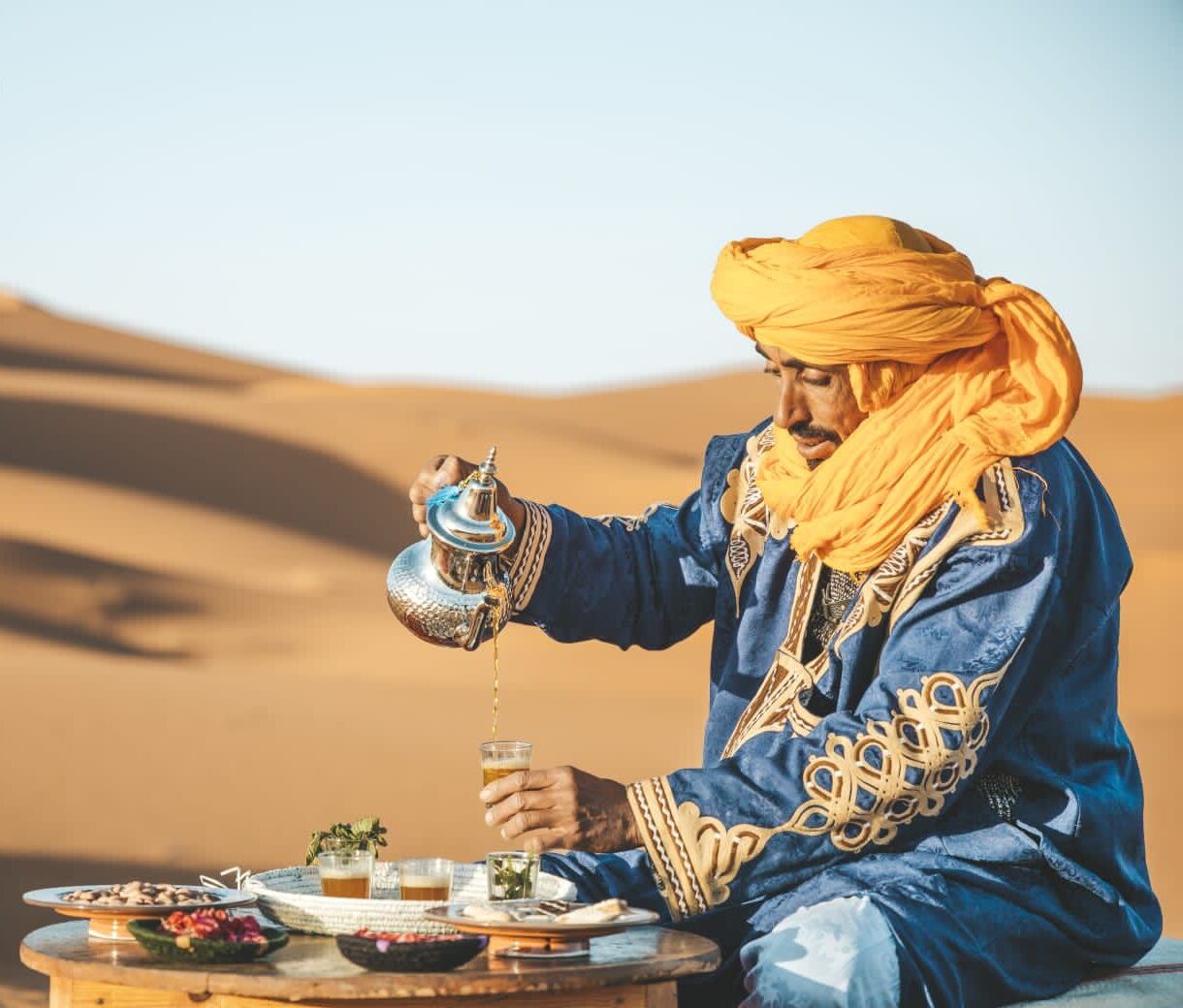
Arriving at Erg Chebbi for the first time is genuinely awe-inspiring. The sand sea extends to the horizon, and depending on the time of year and time of day, the dunes appear in shades of orange, red, gold, or pink. The silence here is profound—no traffic noise, no urban hum, just wind and space.
Choosing Your Merzouga Luxury Desert Camp
Once you've completed your journey, you'll want to select accommodations that match your vision of the desert experience. The difference between camps can be significant, both in terms of comfort and experience quality.
What Makes a Luxury Desert Camp
A true luxury desert camp balances desert authenticity with modern comfort. The best camps offer:
- Authentic Berber styling with traditional architecture and design
- Private or semi-private accommodations with en-suite facilities
- Excellent cuisine drawing on traditional Moroccan ingredients and modern preparation
- Thoughtfully planned experiences including camel trekking, dune exploration, and cultural interactions
- Knowledgeable hosts who understand both the desert environment and traveler needs
Original Desert Camp exemplifies this balance. Located in the heart of Erg Chebbi, the camp features traditionally-designed guest tents with comfortable beds and private bathrooms—a rare combination that many visitors appreciate. The camp's kitchen team creates memorable meals using local ingredients, often prepared in traditional Berber fashion. More importantly, the staff's deep knowledge of the desert and commitment to creating genuine cultural connections elevates the entire experience.
What to Look for in a Camp
When selecting a camp, research:
- Guest reviews on multiple platforms
- Camp policies regarding environmental responsibility
- Activities included versus those that incur extra fees
- Dietary accommodations if you have specific requirements
- Communication responsiveness from booking to arrival
Physical Preparation for the Journey
The drive from Marrakech to Merzouga can be challenging if you're not prepared. Here are practical considerations:
Managing the Drive
- Stay hydrated: Bring plenty of water, as the air becomes progressively drier
- Avoid excessive caffeine: It can contribute to dehydration and sleep disruption
- Stretch regularly: Stop every 1-2 hours to walk around
- Protect your skin: Use sunscreen and a hat, as the sun's intensity increases as you head south and east
- Adjust sleep patterns: If possible, rest well the night before starting your journey
Altitude Considerations
The Atlas Mountains cross reaches over 2,200 meters elevation. While not extreme, some travelers experience mild altitude effects. These typically include minor headaches or slight fatigue. The remedy is simple: hydration, rest, and allowing your body to adjust.
Weather Awareness
The experience varies dramatically by season:
- Summer (June-August): Extremely hot (40°C+/104°F+), but fewer tourists and absolutely clear night skies
- Spring (March-May) and Fall (September-October): Ideal weather, moderate temperatures, excellent visibility
- Winter (November-February): Cool to cold, occasional rain in the mountains, fewer tourists
Most travelers consider spring and fall the optimal times for this journey.
Packing Essentials for Your Journey and Stay
Packing thoughtfully ensures maximum comfort and enjoyment.
For the Journey
- Comfortable, loose-fitting clothing
- Sunscreen and lip protection
- Sunglasses
- A hat or headwrap
- Light layers (temperature varies significantly with elevation)
- Medications (bring prescriptions and over-the-counter essentials)
- Entertainment (books, audiobooks, podcasts for long drives)
For the Desert
- Additional lightweight clothing (you'll need layers despite the heat— nights are cool)
- Sturdy walking shoes (broken-in hiking boots are ideal for sand dunes)
- Toiletries and personal care items
- A good book or journal
- Camera equipment (extra batteries, memory cards, and lens cleaning supplies)
- Reusable water bottle (staying hydrated is critical in the desert)
- Moisturizer (the dry air can be harsh on skin)
What Original Desert Camp Provides
You don't need to pack everything—our camp supplies quality bedding, towels, basic toiletries, and meals prepared by our skilled kitchen team. We also provide blankets for the chilly desert nights, so you can travel lighter while maintaining comfort.
Final Thoughts
The journey from Fes to Merzouga is more than just transportation—it's an immersive introduction to Morocco's diverse landscapes and rich culture. With proper preparation, realistic expectations about travel time, and mindful pacing, you'll arrive at Original Desert Camp rejuvenated and ready to embrace the magic of the Sahara. Whether you're watching the sunset paint the dunes gold or gazing up at a sky full of stars, the memories you create on this journey will rival even the destination itself.