
Merzouga Bivouac Desert Camp: What Makes Bivouac Stays Special
There's something profoundly transformative about spending a night under the endless stars of the Sahara Desert. When most travelers think about desert experiences in Morocco, images of rolling golden dunes, camel treks, and traditional Berber culture come to mind. But what truly sets a Merzouga bivouac desert camp experience apart from other accommodations is the authentic, intimate connection you develop with the desert landscape and its people. In this comprehensive guide, we'll explore what makes bivouac stays in Merzouga so special and why this remote corner of southeastern Morocco has become a bucket-list destination for adventurers and culture enthusiasts alike.
Understanding What a Bivouac Camp Really Is
The Origins and Philosophy of Bivouac
The term "bivouac" comes from French military tradition, originally referring to a temporary military camp. In the context of Moroccan desert tourism, a bivouac has evolved into something far more romantic and culturally rich. A Merzouga bivouac desert camp isn't just a place to sleep—it's a carefully curated experience designed to immerse you in Saharan life while maintaining essential comfort and hospitality.
Unlike traditional hotels or resorts, bivouac camps embrace the desert aesthetic. They typically feature Berber-style tents, often called "khayma," which are traditionally woven from goat hair and camel wool. These aren't basic camping tents; they're architecturally designed structures that have protected Nomadic peoples for centuries. The materials naturally regulate temperature, keeping interiors cool during blazing days and warm during chilly desert nights.
How Bivouacs Differ from Other Desert Accommodations
The distinction between a bivouac and a traditional desert hotel or guesthouse is significant. While a luxury resort might offer air conditioning and modern amenities in stone buildings, a bivouac prioritizes authenticity and connection. At Original Desert Camp, for example, guests experience the genuine rhythm of desert life—waking with the call to prayer echoing across the dunes, sharing meals with Berber hosts, and settling into the profound silence that only exists in remote desert landscapes.
This doesn't mean sacrificing comfort. Modern bivouac camps have evolved considerably. Most quality establishments now offer private en-suite bathrooms, comfortable bedding, solar-powered lighting, and hot water. The difference is that these comforts are integrated thoughtfully, enhancing rather than replacing the authentic experience.
Why Merzouga and Erg Chebbi Stand Out
The Geography and Magic of Erg Chebbi
Merzouga is a small village in the Errachidia Province of southeastern Morocco, and it serves as the gateway to Erg Chebbi, one of Morocco's most dramatic sand dune systems. Erg Chebbi represents everything travelers imagine when they think of the Sahara: towering dunes that can reach heights of 150 meters, undulating landscapes that shift with the wind, and an isolation that feels almost otherworldly.
What makes Erg Chebbi particularly special is its proximity to other diverse landscapes. Within a day's journey, you can encounter rocky plateaus, palm oases, and the Atlas Mountains. This geographical diversity means that a stay at a Merzouga bivouac desert camp like Original Desert Camp offers varied experiences without requiring extensive travel.
The Berber Culture Connection
The villages surrounding Merzouga have been home to Berber and Tuareg communities for centuries. These communities have developed profound knowledge systems about desert survival, navigation, and sustainable living. A bivouac stay provides genuine opportunities to interact with these cultures—not as museum exhibits, but as living traditions.
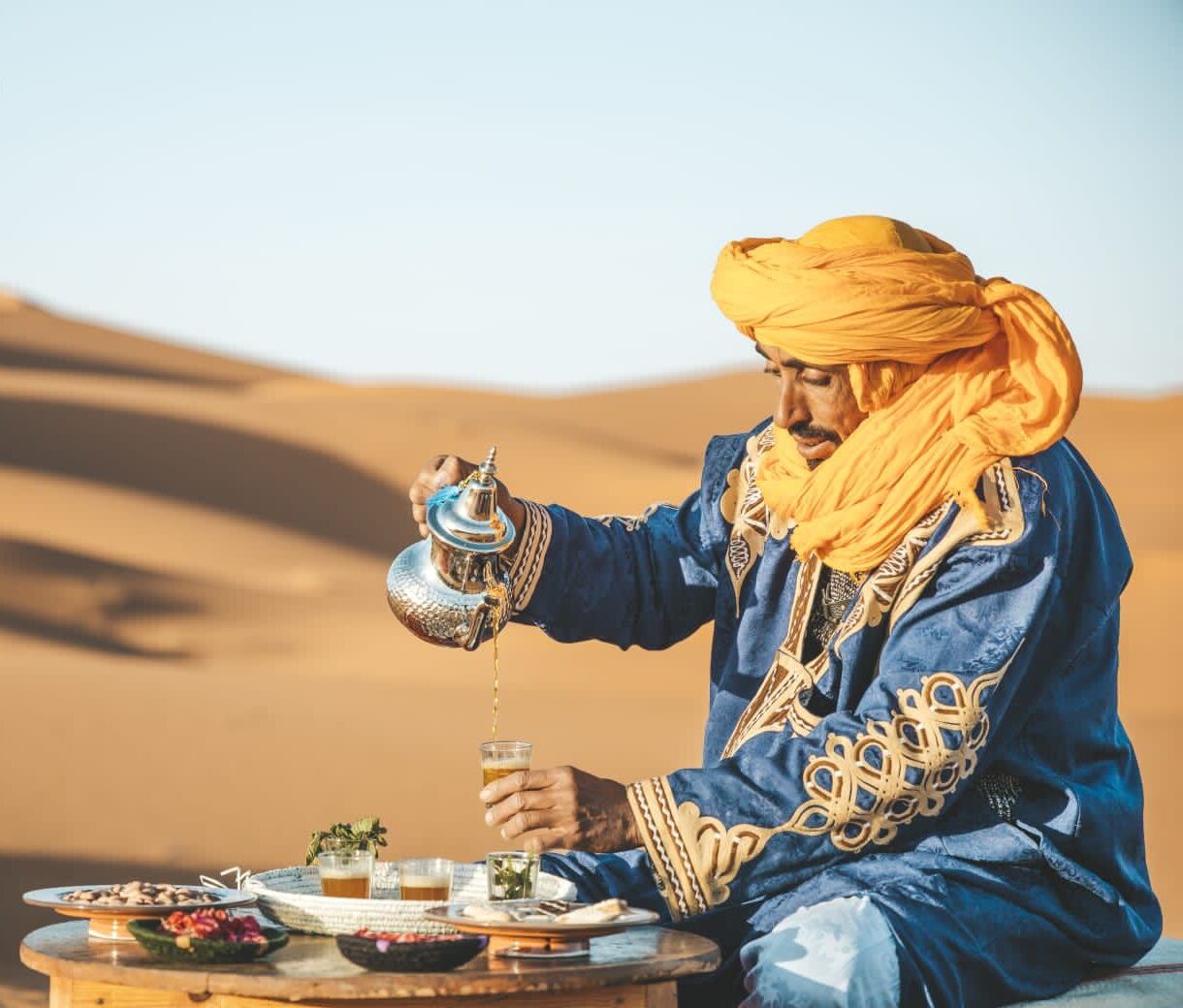
The hospitality embedded in Berber culture is legendary. The ritual of serving traditional mint tea, the preparation of tagine meals cooked over open fires, and the sharing of stories under the stars are genuine expressions of Saharan hospitality, not performances for tourists. When you stay at a Merzouga bivouac desert camp, you're participating in traditions that have remained relatively unchanged for generations.
The Complete Bivouac Experience
Camel Trekking and Desert Navigation
Most bivouac stays include camel trekking as a central component. These aren't amusement park rides—they're genuine transportation in an environment where camels have been the primary means of crossing desert landscapes for thousands of years. A proper camel trek typically begins in late afternoon, when temperatures become more manageable, and continues into evening as you make your way toward your bivouac camp.
The experience of trekking across Erg Chebbi's dunes on camelback is meditative. There's a rhythm to camel movement, a gentle sway that becomes almost hypnotic. As you traverse the landscape, experienced guides share knowledge about desert navigation, pointing out natural markers and explaining how traditional traders knew their way across seemingly featureless terrain. Original Desert Camp's guides, many of whom have family histories spanning generations in these desert regions, provide this context naturally throughout your journey.
The Sunset Experience
If there's one moment that defines a bivouac Merzouga desert camp experience, it's watching the sunset from the dunes. As afternoon light transforms the landscape, sand takes on colors ranging from golden yellow to deep orange to rich burgundy. The temperature drops noticeably, and the light becomes increasingly diffuse and magical.
Most bivouac camps position their evening activities to capture this natural spectacle. At Original Desert Camp, guests often gather at a high point on the dunes as sunset approaches. Some choose to remain quiet, absorbed in the visual drama. Others engage in conversation, share music, or simply sit in companionable silence. The experience often feels spiritual, regardless of one's background or beliefs.
Stargazing and the Night Sky
Once darkness settles, another revelation emerges. Erg Chebbi's remote location means virtually no light pollution. The night sky transforms into something most people have never actually experienced—a sky so thoroughly populated with stars that it seems impossible. The Milky Way isn't a faint smudge; it's a luminous river stretching across the heavens.
A quality Merzouga bivouac star experience involves more than simply lying under the sky. Many camps now offer information about constellations, planetary visibility, and the history of astronomical observation. Guides might point out Polaris, which has guided travelers for millennia, or explain the seasonal variations in visible constellations. Depending on the time of year, you might observe planets, meteor showers, or other celestial phenomena.
The Morning Desert Walk
The Sahara at dawn is quieter and cooler than at midday, making early morning an ideal time to explore the dunes. Many bivouac experiences include a guided walk as the sun rises. These walks provide different perspectives on the landscape—the way light plays across dunes, the various species of desert flora and fauna that emerge in cooler hours, and the sense of solitude as your group becomes small figures against vast dunes.
Wildlife in Erg Chebbi has adapted remarkably to extreme conditions. You might spot desert foxes, jerboas, or various bird species. The tracks left by nocturnal creatures tell stories of nighttime desert activity. Experienced guides can read these signs, explaining the ecosystem that persists in this seemingly barren landscape.
Practical Aspects of Bivouac Stays
Accommodation Standards and Amenities
Modern bivouac camps have established comfort standards that make desert experiences accessible to people who couldn't have managed rougher camping conditions. A typical tent at Original Desert Camp features:
- A raised platform preventing ground moisture and sand
- Quality mattresses and bedding
- Private or semi-private bathroom facilities
- Sometimes heating or cooling systems
- Lighting (often solar-powered)
- Mosquito netting when necessary
These amenities might seem basic compared to luxury hotels, but they represent a significant evolution from historical bivouac conditions. The goal is to remove unnecessary discomfort while preserving authenticity.
Meals and Food Experiences
Food is central to the bivouac experience. Meals are typically prepared on-site, often using traditional cooking methods. Tagine—the iconic North African slow-cooked stew—is prepared in conical clay pots over open flames. Couscous, fresh bread, and various vegetable and protein preparations round out menus. For guests with dietary restrictions, good camps like Original Desert Camp accommodate needs while maintaining the traditional food experience.
Evening meals are communal affairs, bringing guests and staff together around shared tables or around an open fire. This communal aspect reflects genuine Berber hospitality traditions where meals are social and relational events. Breakfast typically includes strong Moroccan mint tea, fresh bread, olives, cheese, and various accompaniments.
What to Pack and Prepare
Understanding what to bring ensures your bivouac experience is comfortable and safe:
Clothing considerations: Daytime temperatures can exceed 40°C (104°F), but nights drop significantly, sometimes to near freezing. Layering is essential. Bring lightweight, loose-fitting clothing for days, and warmer layers for evenings. A head covering protects from sun and provides cultural appropriateness.
Sun and skin protection: High desert sun is intense. Sunscreen, sunglasses, and a quality hat are non-negotiable. Lip balm with SPF and moisturizer also matter—desert air is extremely dry.
Health and hygiene: Bring any personal medications, as these might not be readily available. Blister prevention is important if you'll be walking extensively. Motion sickness medication might help if camel riding bothers you.
Practical items: A good camera or smartphone captures memories, though many travelers find themselves putting devices away to be fully present. A book, journal, or musical instrument can enrich quiet moments.
The Cultural Dimension
Respectful Engagement with Berber Communities
The most meaningful bivouac experiences involve genuine cultural exchange. This requires approaching Berber communities with respect and genuine curiosity rather than viewing them as entertainment or exotic backdrop. Quality camps actively facilitate this respect through staff training, guest orientation, and structured interactions that feel natural rather than performative.
At Original Desert Camp, guides are community members with deep roots in the region. They share stories, teach traditional crafts, and explain the realities of contemporary life in remote desert communities. This creates richer understanding than surface-level tourism could provide.
Contemporary Desert Life
While the romantic image of desert life captures imagination, it's important to understand contemporary reality. Modern Merzouga residents navigate between traditional practices and modern realities. Solar panels power camps and homes. Mobile phones enable communication across distances. Young people balance cultural heritage with opportunities elsewhere.
Reputable bivouac camps operate with awareness of these complexities, supporting local communities through employment, purchasing, and fair business practices. A stay at a responsible camp means your tourism actually benefits the communities hosting you.
Why Choose Original Desert Camp
Original Desert Camp represents the evolution of bivouac hospitality—blending authentic desert experience with thoughtful comfort and genuine cultural engagement. The camp's team includes long-term residents who share deep knowledge of Erg Chebbi and surrounding regions. Accommodations balance comfort with authenticity. Meals showcase traditional preparation methods with attention to quality and dietary needs.
Beyond logistics, Original Desert Camp's approach prioritizes meaningful connection—with the landscape, with Berber culture, and with fellow travelers. This transforms a bivouac stay from simple accommodation into genuine experience.
Creating Your Perfect Merzouga Experience
Timing Your Visit
The Sahara's climate varies dramatically seasonally. October through April offers ideal conditions—warm days and cool nights without extreme temperatures. May through September brings intense heat, though some travelers prefer this period for smaller crowds and lower prices. Understanding seasonal conditions helps you prepare appropriately and manage expectations.
Combining Bivouac with Other Activities
Many travelers combine their Merzouga bivouac stay with other Moroccan experiences. A camel trek exploring Erg Chebbi might precede a visit to Fez's medina or a trek in the Atlas Mountains. This allows experiencing desert and mountain landscapes, different cultural contexts, and diverse climates within a single trip.
Overcoming Potential Challenges
Some people worry about discomfort, isolation, or cultural differences. These concerns are understandable but often unfounded. Quality bivouacs like Original Desert Camp actively work to ensure guests feel safe, comfortable, and welcomed. Staff speak English and French. Medical supplies are available. Communication with camp staff before arrival allows addressing specific concerns.
The isolation itself—which might initially seem daunting—often becomes the greatest gift of a bivouac experience. Disconnection from constant connectivity, immersion in natural rhythms, and the profound quiet of the desert create space for reflection and renewal that rarely occurs in everyday life.
The Lasting Impact of a Desert Bivouac
A bivouac stay in Merzouga typically shifts how travelers perceive themselves and the world. The experience of witnessing vast landscapes, connecting with desert communities, and contemplating existence under star-filled skies leaves lasting impressions. Many travelers report returning home with renewed perspective, decreased stress , and a deeper appreciation for simplicity and human connection.
The desert has a way of stripping away the superfluous—both literally and metaphorically. When you're surrounded by golden dunes and infinite horizons, the trivial concerns that occupy so much mental energy at home suddenly lose their grip. Guests often find themselves thinking more clearly, sleeping more deeply, and engaging more authentically with both the people around them and their own inner landscapes.
This transformation isn't mystical or coincidental. It's the natural result of stepping outside your familiar environment, slowing down, and allowing yourself to be present in a place of raw, unfiltered beauty. Original Desert Camp facilitates this journey by combining authentic desert hospitality with thoughtful amenities, creating the ideal conditions for meaningful personal growth.
Final Thoughts
A bivouac experience in Merzouga is more than just a vacation—it's an investment in your well-being and perspective. Whether you're seeking adventure, spiritual renewal, cultural connection, or simply a break from the demands of modern life, the desert offers something genuinely transformative. If you've been contemplating whether a desert camp stay is right for you, the answer is likely yes. The Sahara is calling, and Original Desert Camp is ready to welcome you home.