
Merzouga Camping Morocco Blog: Stories, Tips and Inspiration from the Sahara
The Sahara Desert has captivated travelers, poets, and adventurers for centuries. There's something profoundly transformative about standing beneath an impossibly star-filled sky, feeling the cool desert breeze after a scorching day, and realizing you're miles away from the noise and chaos of modern life. Merzouga, a small Berber village in southeastern Morocco, sits at the gateway to Erg Chebbi—one of the Sahara's most spectacular sand dune fields. This is where thousands of travelers come each year to experience authentic desert camping, and where unforgettable memories are created beneath ancient stars.
If you're considering a desert camping adventure in Morocco, you've come to the right place. This Merzouga camping blog will guide you through everything you need to know, from practical logistics to the deeper meaning of what makes a Sahara experience truly special.
Understanding Merzouga and Erg Chebbi
What Makes Merzouga Special?
Merzouga is more than just a tourist destination—it's a living, breathing Berber community with a rich cultural heritage that stretches back centuries. Located in the Tafilalet region near the Algerian border, this village has traditionally been home to nomadic and semi-nomadic Berber families who have adapted to desert life for generations.
Erg Chebbi, the massive dune field adjacent to Merzouga, rises dramatically from the surrounding landscape. These towering sand dunes—some reaching heights of 150 meters—create a landscape of almost otherworldly beauty. The contrast between the rust-colored sand, the azure sky, and the scattered palm oases creates photography opportunities that seem almost unreal.
What distinguishes Merzouga from other Moroccan desert destinations is its accessibility combined with its authenticity. Unlike some tourist-heavy destinations, Merzouga maintains much of its genuine Berber character while offering comfortable accommodations and experiences for visitors seeking something meaningful.
The Climate and Best Times to Visit
Understanding Merzouga's climate is essential for planning a successful desert camping trip. The Sahara is unforgiving—temperatures can swing dramatically from day to night. During summer months (June through August), daytime temperatures regularly exceed 45°C (113°F), making outdoor activities uncomfortable and potentially dangerous. The desert air is extremely dry, and sun exposure is intense.
The ideal times to visit are spring (March to May) and autumn (September to November). During these periods, daytime temperatures range from 20-30°C (68-86°F), cooling to pleasant 10-15°C (50-59°F) at night. These months offer the perfect balance for exploring the dunes comfortably while still experiencing the authentic desert atmosphere.
Winter visits (December to February) are possible but require warmer bedding and clothing. At night, temperatures can drop to freezing, though daytime warmth is usually pleasant.
Planning Your Merzouga Desert Camp Experience
Choosing the Right Camp
When researching desert camps in Merzouga, you'll encounter various options ranging from basic Bedouin-style tents to luxury glamping experiences. Your choice should depend on your comfort expectations, budget, and what kind of experience you're seeking.
Original Desert Camp offers a sweet spot between authentic desert camping and genuine comfort. The camp features traditional Berber-inspired accommodations with thoughtful amenities—private tents with proper bedding, bathroom facilities, and solar-powered lighting that keeps the experience authentic while ensuring you can actually sleep comfortably. This balance is crucial; you want the romance of desert camping without sacrificing basic hygiene and rest.
Key factors to consider when choosing a camp include:
Location and Access: Camps closer to Erg Chebbi's main dunes offer easier access to sunrise and sunset viewing. Original Desert Camp's location provides direct access to the dunes while maintaining reasonable distance from the village.
Authenticity vs. Comfort: Determine your priority. Do you want a completely primitive experience, or are you willing to accept some modern conveniences for better sleep and hygiene? Most travelers find the middle ground most satisfying.
Staff and Service Quality: A great desert camp experience depends heavily on knowledgeable, friendly staff. Look for camps where staff can speak multiple languages and demonstrate genuine knowledge about Berber culture, desert wildlife, and local history.
Food and Meals: Desert camps typically provide meals. Ask about dietary accommodations and the quality of ingredients. Good camps source fresh vegetables from local markets and prepare traditional Moroccan cuisine alongside options for different tastes.
Activity Options: Beyond the basic camel trekking, what else does the camp offer? Sunset viewing, stargazing with interpretation, Berber cultural experiences, and local village visits enhance the experience significantly.
What to Pack for Desert Camping
Packing correctly for Merzouga desert camping ensures comfort and safety. Here's what experienced travelers recommend:
Clothing:
- Light, breathable clothing for daytime (cotton is better than synthetics)
- A warm layer for evening (fleece or lightweight jacket)
- A headscarf or hat for sun protection
- Sturdy walking shoes for dune exploration
- Comfortable camp shoes or sandals
- Swimwear (some camps have showers; nearby oases offer swimming opportunities)
Sun and Skin Protection:
- High SPF sunscreen (50+) and reapply frequently
- Sunglasses with UV protection
- Lip balm with SPF
- After-sun moisturizer (the desert is incredibly drying)
Health and Hygiene:
- Any personal medications
- Basic first-aid supplies
- Wet wipes and hand sanitizer
- Toiletries (camps provide basics, but bring your preferences)
- Blister treatment (hiking dunes can cause blisters)
Other Essentials:
- Reusable water bottle (stay hydrated)
- Power bank for charging devices
- Camera or smartphone for photography
- Notebook for journaling
- Cash in Moroccan dirhams (ATMs in Merzouga are limited)
The Merzouga Desert Camp Experience: What to Expect
Your First Day
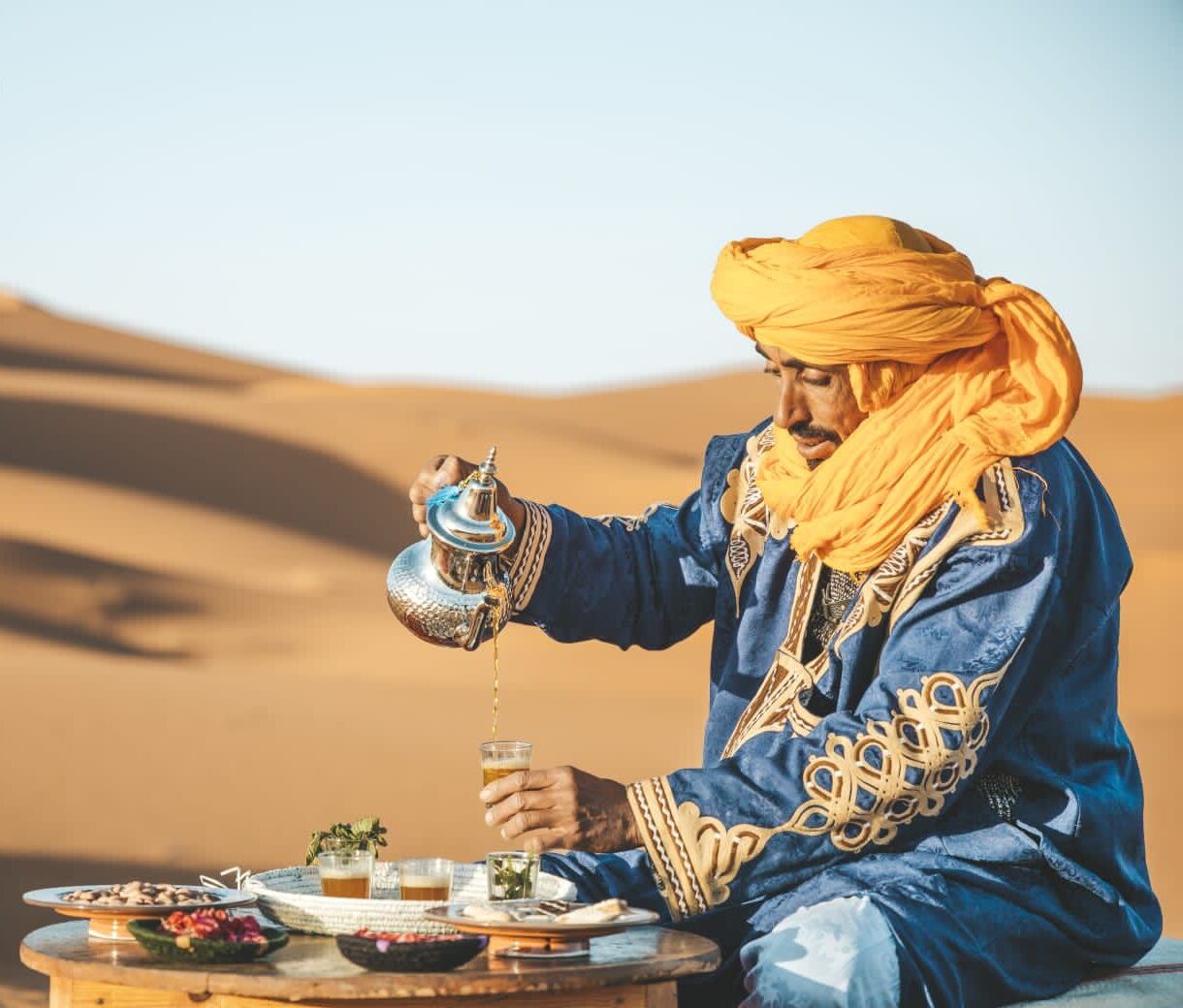
Most visitors arrive in Merzouga in the afternoon after driving from Fez or Marrakech (an 7-10 hour journey depending on your route). You'll be welcomed at your camp with traditional Moroccan mint tea—a ritual that immediately immerses you in local culture.
After checking into your tent and freshening up, the evening is typically unscheduled. This is perfect for exploring the immediate camp area, meeting other guests, and acclimating to the desert environment. Some camps offer sunset camel trekking on the first evening if you arrive early enough.
Dinner is usually served around sunset—a communal experience where you'll dine with other guests and staff under the stars or in a dining tent. Traditional tajines, couscous, and berbere bread are common offerings, often followed by mint tea and fresh fruit. These meals are opportunities to hear stories from fellow travelers and sometimes learn more about Berber culture from knowledgeable staff.
The Magic of Sunrise
Desert sunrise is something that photographs can never adequately capture. You need to experience it directly—standing on the dunes as darkness gradually yields to color, with temperatures rising and the landscape transforming from monochrome to vivid hues of orange, red, and gold.
Most camps organize sunrise camel treks departing around 5:30-6:00 AM. You'll mount a dromedary camel—not the easiest process, but one that quickly becomes amusing as you find your balance. The walk across still-cool sand, with the sun rising before you, creates a meditative experience that many travelers describe as life-changing.
The actual mechanics matter less than the atmosphere. Yes, your camel moves slowly. Yes, the saddle might be slightly uncomfortable. But somewhere between the rhythmic swaying, the silence, and the stunning light, something clicks. You're present in a way that modern life rarely permits.
Daytime Activities
The actual time spent actively exploring dunes might be shorter than expected—usually 2-3 hours total (combined sunrise and sunset treks). The remaining daylight is typically spent at the camp relaxing, swimming, exploring the village, or resting for the evening's activities.
Some camps offer optional activities like visits to local Berber villages, learning traditional crafts, cooking lessons, or hiking the dunes on foot (an alternative to camel trekking). Original Desert Camp arranges authentic interactions with local Berber families when guests are interested—genuine cultural exchange rather than performative tourism.
The heat of midday (noon to 3 PM) is genuinely uncomfortable. Most camps anticipate this, scheduling meals and rest time during these hours, often in shaded areas or tents where you can escape the intensity.
The Stargazing Experience
As evening approaches, a different kind of magic emerges. Desert nights offer some of the clearest stargazing opportunities on Earth. Far from light pollution, thousands of stars become visible—the Milky Way stretches across the sky in a way that city-dwellers rarely experience.
Many camps arrange evening activities around stargazing, sometimes with basic astronomy information. At minimum, sitting outside after dinner with tea and conversation under these stars becomes a profoundly connecting experience. Guests often report that this moment—simply existing beneath such vastness—changes their perspective on life's worries and priorities.
Cultural Connections
Authentic desert camps create opportunities for genuine cultural exchange with Berber staff and local community members. This might include:
- Traditional music and storytelling: Evenings often feature Berber musicians playing traditional instruments like the oud, bendir, or lotar.
- Cooking experiences: Learning to prepare traditional Moroccan food with camp staff.
- Language exchange: Staff teaching travelers basic Berber or Arabic phrases.
- Family visits: Arranged, respectful visits to local Berber homes where you'll be welcomed with hospitality.
- Local market tours: Guided visits to Merzouga's market, explained by someone who knows the vendors and understands local commerce.
These interactions, when genuine rather than staged, provide insight into how Berber communities actually live and value hospitality above almost all else.
Practical Tips from the Merzouga Camp Blog
Hydration and Health in the Desert
The desert's dryness is deceptive. You might not feel as thirsty as you actually are, yet your body loses water rapidly through perspiration and respiration. Drink consistently throughout the day—at least 3-4 liters of water daily, more in summer. Electrolyte drinks help maintain balance during physical activity.
Altitude affects some visitors (Merzouga sits at approximately 800m elevation), though usually minimally. If you're prone to altitude sensitivity, ascend gradually.
The sun's intensity is genuinely dangerous. Sunburn at this intensity can happen in 15-20 minutes of midday exposure. Lightweight long sleeves and pants aren't just traditional—they're practical protection. The loose-fitting Berber clothing style has evolved over centuries for excellent reasons.
Respecting Local Culture
The Berber people of Merzouga practice Islam and maintain values around modesty, hospitality, and respect for guests. A few guidelines enhance your experience:
- Dress modestly, especially in the village. Covered shoulders and knees are respectful.
- Ask permission before photographing people.
- Accept hospitality graciously—refusing mint tea or food can be seen as disrespectful.
- Learn basic greetings in Tamazight (the Berber language): "Azul" means hello, "Tanmirt" means thank you.
- Avoid discussing politics or religion unless locals initiate.
- Be genuinely curious about their lives rather than approaching as a consumer of "experiences."
Managing Expectations
Desert camping isn't a luxury resort experience, even at higher-end camps. Expect:
- Limited hot water (collected and heated earlier in the day)
- Basic bathroom facilities (clean and functional, but not elaborate)
- Simple bedding (though proper mattresses, not thin mats)
- Limited electricity (early mornings and evenings)
- No WiFi or cell service (actually, many travelers love this)
- Sand everywhere (it's the desert—it gets into your tent, your clothes, your sleeping bag)
Reframing these limitations as features rather than bugs changes the entire experience. The lack of connectivity becomes liberating. Simple accommodations heighten appreciation for warmth and shelter. Basic conditions create shared community among guests facing the same challenges.
Transportation to and From Merzouga
Most visitors reach Merzouga via a desert route drive from Fez or Marrakech. These are typically long days (7-10 hours) that traverse dramatic landscapes—the Atlas Mountains, Tizi n'Tichka Pass, and the changing terrain from green valleys to semi-arid plateaus and eventually the golden dunes themselves.
Many camps, including Original Desert Camp, can arrange these transfers. While they're lengthy, they're also part of the adventure—you're not flying over the landscape, you're moving through it, watching the geography transform hour by hour. Some travelers break the journey with overnight stops in Ifrane or Midelt.
Alternatively, you can rent a car and drive yourself, though navigating unfamiliar roads in a foreign country adds complexity. Flying into Marrakech or Fez is standard; from there, ground transport is necessary.
When to Visit
The ideal windows are October-November and February-April. Temperatures are moderate—warm during the day (70-80°F), cool at night (50-60°F)—making tent camping genuinely comfortable. Summer (June-August) can exceed 110°F, making daytime activities nearly unbearable. Winter (December-January) is mild but can dip near freezing at night, though still manageable with proper bedding.
Each season offers different advantages: spring brings wildflowers to the surrounding landscape; autumn offers crisp, clear skies perfect for stargazing.
Final Thoughts
Desert camping in Merzouga isn't for everyone, but for those seeking genuine connection—with landscape, culture, and themselves—it offers something increasingly rare in modern travel. Original Desert Camp provides the perfect base for this experience: authentic enough to feel real, comfortable enough to stay present, and hospitable enough that you'll want to return. The desert teaches patience, humility, and wonder. All you have to do is show up.