
Merzouga Desert Camp Blog: Travel Stories from the Sahara
There's something profoundly transformative about standing at the edge of the Sahara as the sun begins its descent. The endless dunes stretch before you in waves of amber and gold, and for the first time in your life, you understand why travelers have been drawn to this vast desert for centuries. This is the magic that awaits those who venture to Merzouga, a small Moroccan village that has become a gateway to one of the world's most extraordinary landscapes.
The Merzouga desert camp experience isn't just about checking off a bucket-list destination. It's about immersing yourself in a landscape that challenges your perspective, connects you with Berber culture, and offers moments of genuine wonder that reshape how you see the world. Through this merozouga camp blog post, I'm sharing real stories, practical insights, and everything you need to know about planning an unforgettable desert adventure.
Understanding Merzouga: Gateway to the Sahara
What Makes Merzouga Special
Merzouga is a village of just a few hundred permanent residents, yet it's become one of Morocco's most visited desert destinations. The reason is simple: it's positioned directly at the edge of Erg Chebbi, one of the Sahara's most dramatic ergs (sand dune fields). Unlike desert regions that require long treks to reach significant dunes, Merzouga is literally built on the doorstep of towering dunes that rise over 150 meters into the sky.
The village itself maintains a timeless quality despite its growing tourism. Walking through Merzouga's streets, you'll encounter Berber families who have lived here for generations, children playing in courtyards, and the daily rhythms of desert life that have remained relatively unchanged for centuries. This authentic backdrop is what makes staying in a merzouga camp experience so enriching—you're not isolated in a theme park, but genuinely connected to the landscape and its people.
The Geography of Erg Chebbi
Erg Chebbi isn't just a single dune; it's a complex ecosystem of interconnected sand formations that shift subtly with seasonal winds. The dunes here have a distinctive reddish-orange hue that intensifies during sunset and sunrise, creating photographic conditions that rival anywhere else on Earth. The ergs extend across the Moroccan-Algerian border, making this region historically significant as a crossroads for Saharan trade routes.
What makes this particular location special for desert camps is its accessibility combined with its dramatic beauty. You can reach Merzouga by car from the larger cities like Meknes or Fez, making it achievable for travelers with limited time. Yet once you're here, the landscape is uncompromisingly authentic—no oases nearby, no significant infrastructure, just the raw Sahara as it has existed for millennia.
Planning Your Merzouga Camp Experience
Best Times to Visit
The Sahara isn't hospitable year-round, and planning your visit around the climate is crucial for comfort and safety.
October to April represents the ideal season for desert camping. Daytime temperatures hover around 15-25°C (59-77°F), and nights cool significantly—sometimes dropping to near freezing. This is when most travelers visit, and when merozouga camp experiences operate at full capacity. The air is clear, sunrises and sunsets are spectacular, and the cooler weather makes exploring the dunes genuinely enjoyable rather than exhausting.
May to September brings extreme heat, with daytime temperatures regularly exceeding 40°C (104°F). While some camps remain open, the experience is considerably less comfortable. Many travelers report that excessive heat makes it difficult to fully enjoy camel trekking and dune exploration. Additionally, facilities may be strained during peak heat when water usage increases dramatically.
March and April offer a sweet spot: the weather is warm but manageable, wildflowers bloom in the surrounding regions, and the tourist season hasn't reached its peak, meaning smaller group sizes and more intimate experiences.
Getting to Merzouga
Most international visitors arrive through Morocco's larger cities. Fez and Meknes are the most popular gateways, with good flight connections and car rental infrastructure.
The drive from Fez to Merzouga takes approximately 8-10 hours depending on your route and pace. Rather than rushing this in one day, most experienced travelers break it into two days, exploring the Middle Atlas mountains, visiting Ifrane (sometimes called "Morocco's Switzerland"), and stopping in towns like Midelt. This approach transforms the journey itself into a travel story rather than just a transfer.
From Meknes, the route typically follows the circular path through the Ziz Valley, offering dramatic cliff scenery and passes through several traditional Berber villages. The drive itself becomes part of your desert experience.
Choosing the Right Camp
Not all merzouga camps are created equal. The spectrum ranges from basic budget accommodation where you'll sleep on a mattress in a shared tent, to luxury camps offering private rooms with en-suite bathrooms and sophisticated amenities.
When evaluating options, consider what matters most to you. Are you primarily seeking authentic immersion, or do you want comfort with a taste of desert life? Do you prefer larger camps with more activities and social opportunities, or smaller operations for more personalized attention?
Original Desert Camp occupies a thoughtful middle ground—it offers genuine Berber desert camp experience with quality accommodations, traditional hospitality, and authentic cultural engagement. The camp balances comfort with authenticity, meaning you'll sleep well and wake refreshed, but you're not isolated from the real desert experience by excessive luxury.
The Merzouga Camp Experience: What to Expect
Your First Afternoon
Most guests arrive in Merzouga mid-afternoon, giving time to settle in before sunset. After checking into your camp, you'll have your first moment to truly absorb the environment. The dunes are visible from virtually every angle—there's an immediate sense of scale that photographs simply don't capture.
This is when many first-time desert visitors feel a mix of emotions: excitement, slight apprehension about the unfamiliar environment, and an almost spiritual calm that the landscape seems to inspire. Experienced camp hosts understand these feelings and give you space to acclimate while remaining available for questions.
At Original Desert Camp, this first afternoon typically includes an orientation and perhaps a short walk to nearby dunes as the afternoon light becomes more interesting. There's time for a proper meal—one of the pleasures of a merozouga camp experience is the quality of food prepared by local cooks who source ingredients from the surrounding region.
Sunset: The Desert's Most Magical Hour
Most merzouga camp schedules build the evening camel trek around sunset. There's a practical reason for this beyond aesthetics—the cooler evening temperatures make camel riding comfortable, and the light is simply incomparable.
Your first camel ride typically lasts 1-2 hours, taking you deeper into the ergs away from the village. Even if you've ridden camels before, riding in Erg Chebbi feels different. The dunes are larger, the horizon more distant, and the sense of being suspended in a timeless landscape more profound.
As the sun approaches the horizon, the entire landscape transforms. The orange dunes seem to glow from within. Shadows deepen the valleys between dunes, creating texture and dimension. If you're photographically inclined, bring a good camera and extra batteries—the light changes rapidly, and you'll want to capture multiple angles and moments.
The best part? When the sun finally touches the horizon, the sounds fade. Desert wind becomes almost meditative. Your guide will likely find a spot on a high dune for you to dismount and watch the sunset without moving—one of those moments that genuinely changes how you experience landscape and scale.
Evening at Camp
After sunset, the return to camp takes on a different character. The temperature is dropping, and the dunes have taken on deeper colors. Back at the camp, you'll notice the first stars appearing—far more visible than anywhere near civilization due to the minimal light pollution.
Evening meals at a merozouga camp are often the highlight for many guests. Tagine dishes—slow-cooked stews prepared in traditional conical pots—are the standard, typically with chicken, lamb, or vegetable varieties. The food is surprisingly sophisticated, and meals are often communal experiences where guests from various countries share stories and perspectives.
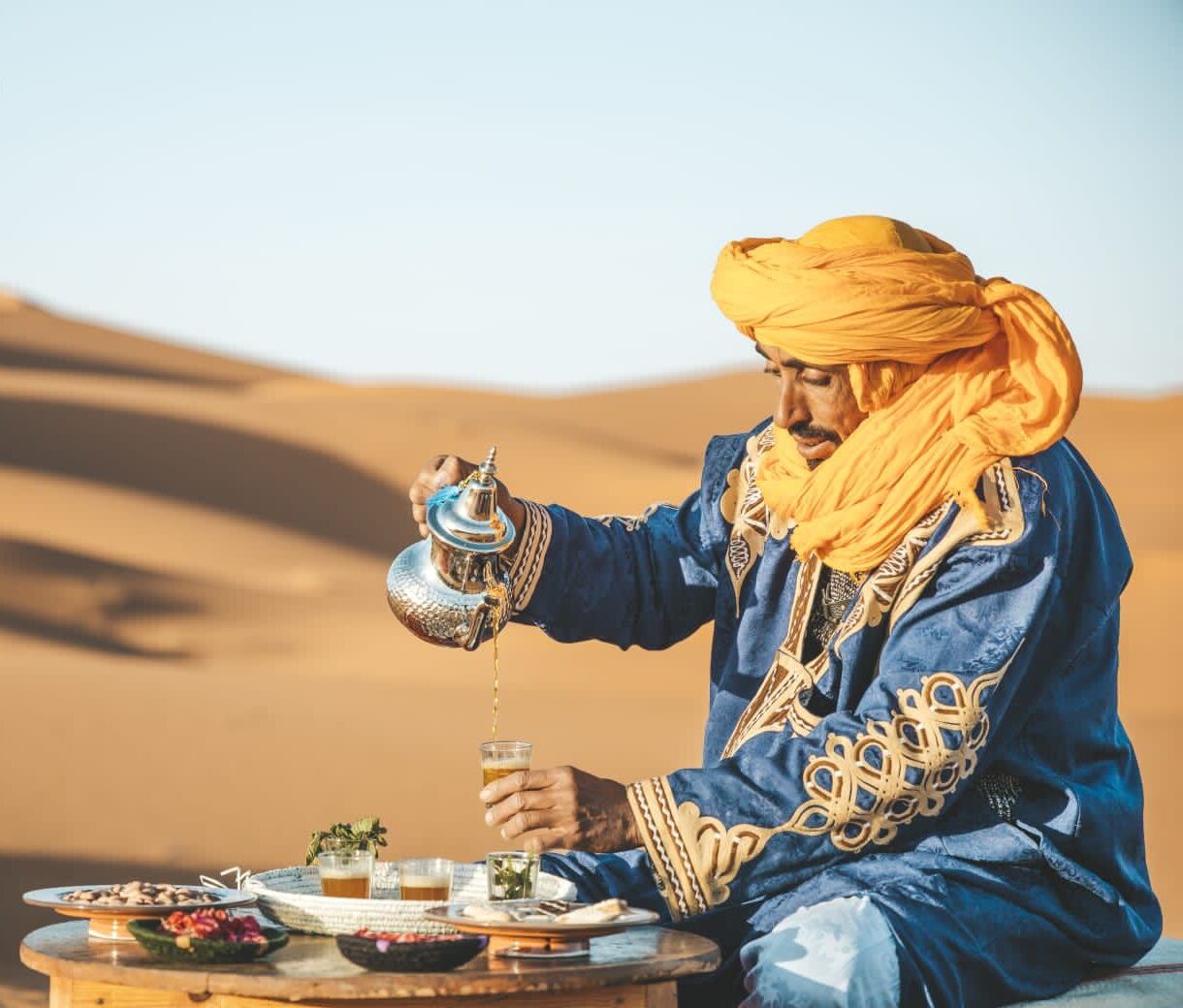
At Original Desert Camp, dinner is frequently prepared in traditional Berber style, with bread baked in clay ovens and dishes that have been made the same way for generations. This is cultural immersion through cuisine—understanding how people have lived and eaten in this environment for centuries.
After dinner, many camps offer traditional music and sometimes Berber dancing. This is where merozouga camp experience can feel either authentic or touristy depending on how it's presented. The best camps present these traditions with respect and knowledge, allowing you to appreciate them as cultural practices rather than performances.
The Desert Night
Once activities conclude and most guests have retired, you'll experience what might be the most transformative part of your merozouga camp experience: the desert night.
The silence is absolute in a way that cities rarely are. You might step outside and initially feel disoriented by the quiet—it's genuinely rare in modern life. Above, the Milky Way stretches across the sky with such clarity that you understand why desert regions have held such importance in astronomy and spiritual practices throughout human history.
The temperature drop can be dramatic. A day that was warm becomes genuinely cold at night—this is why quality bedding and warm blankets are essential. The best camps ensure guests have sufficient layers and heating to be comfortable throughout the night.
Many guests report that their first desert night involves an extended period of simply lying under the stars, experiencing a profound quiet and connection to something larger than themselves. It's not something that can be manufactured or scheduled—it's a gift of the environment itself.
Activities and Experiences Beyond the Camp
Camel Trekking: More Than Just a Tourist Activity
While camel trekking can feel like a tourism cliché, in Merzouga it remains central to understanding the region's history and geography. Berber families have relied on camels for centuries for transport across the Sahara, and experienced guides can share genuine knowledge about the animals and landscape.
Most merozouga camps offer multiple trekking options: half-day excursions, full-day journeys, and multi-day treks that venture deeper into the Sahara. For first-timers, a sunset trek followed by a return trek at sunrise typically provides the best experience—you get the dramatic light and manageable duration without overcommitting your body to camel saddle time.
Sunrise Experiences
If sunset is magical, sunrise offers something equally profound but different. Where sunset provides drama and warmth, sunrise brings clarity and a sense of beginning. Many desert travelers set alarms for 5:00-5:30 AM to climb dunes and watch the light gradually illuminate the landscape.
The advantage of staying at Original Desert Camp is that guides know the best dune locations for sunrise viewing from various camp positions. They can anticipate weather and conditions, and help you position yourself for optimal viewing. They can also explain what you're seeing—the geological formations, the wind patterns that shape dunes, the signs of desert wildlife.
Exploring Villages and Local Culture
Merzouga itself is worth exploring on foot, preferably with a guide who can provide context and introductions. The village has a small cooperative of Berber women who create traditional handicrafts—carpets, jewelry, and textiles using techniques passed through generations. Visiting these spaces, you're directly supporting community members rather than buying mass-produced "authentic" goods from tourist shops.
Some camps arrange visits to nomadic Berber families living in traditional camps. These experiences range from genuinely engaging cultural exchange to somewhat exploitative tourism. The key indicator is whether the family has agreed to the visit with full understanding, and whether your visit genuinely benefits them. Reputable camps like Original Desert Camp vet these experiences carefully, ensuring they respect family privacy and contribute meaningfully to the community.
Photography and Creative Pursuits
The Sahara landscape is endlessly photogenic, and many guests find that the landscape inspires creative work. Photographers find infinite compositional possibilities in the interplay of dune shadows and light. Writers often experience unexpected creative flow in the quiet. Artists sketch. Simply sitting with the landscape inspires reflection.
If photography is your primary focus, communicate this to your camp when booking. The best guides will understand compositional needs and timing requirements, adjusting activities to maximize light and opportunities.
Practical Considerations for Your Merzouga Camp Stay
What to Pack
Packing for a desert camp requires balancing the assumption that it will be hot with the reality that desert nights are genuinely cold. This seems counterintuitive until you experience it.
Essential items:
- Lightweight, breathable clothing for daytime (loose-fitting protects from sun)
- Warm layers for evening (fleece jacket, sweater, or light down)
- Proper footwear (broken-in hiking boots for dune walking , sturdy sandals for camp)
- Sun protection (high SPF sunscreen, hat, sunglasses)
- Toiletries (though basic amenities are provided)
- Any medications you require
- A headlamp or flashlight for nighttime navigation
- Moisturizer (the desert air is extremely dry)
- A lightweight scarf or tagine (versatile for sun, wind, and cultural respect)
Timing Your Visit
The best time to visit Merzouga is October through April, when temperatures are moderate and comfortable for exploration. Summer months (June-August) see temperatures exceed 40°C (104°F), making daytime activities challenging. Spring and autumn offer the most pleasant balance of warm days and manageable nights.
Budget and Value
Original Desert Camp offers exceptional value for a luxury experience. Your stay typically includes accommodation, meals prepared with local ingredients, guide services, and camel trekking. Rather than nickel-and-diming guests with hidden costs, the camp presents transparent pricing that reflects genuine hospitality and quality.
Respecting the Environment
The Sahara is a delicate ecosystem. Responsible travelers stay on marked paths, don't remove any natural items, and minimize water waste. Support the camp's sustainability efforts by respecting their environmental practices.
Final Thoughts
A stay at Original Desert Camp in Merzouga transcends typical tourism—it's an opportunity to disconnect, reflect, and experience one of Earth's most magnificent landscapes with genuine Berber hospitality. Whether you're seeking adventure, spiritual renewal, family bonding, or creative inspiration, the desert delivers with quiet intensity. Come prepared, remain open-minded, and allow the Sahara to work its transformative magic on you.