
Merzouga Desert Camp Dinner: A Guide to Traditional Moroccan Cuisine Under the Stars
When most travelers think about their Merzouga desert camp experience, they envision golden dunes, camel treks, and unforgettable sunsets. But there's another equally magical element that often becomes the highlight of their stay: dinner beneath the infinite Sahara sky. The combination of authentic Moroccan cuisine, the warmth of a desert night, and the gentle flicker of candlelight creates memories that linger long after you've returned home.
A Merzouga camp dinner isn't just about sustenance—it's a cultural immersion, a celebration of centuries-old culinary traditions, and an opportunity to connect with the rhythm of desert life. Whether you're staying at Original Desert Camp or planning your first Sahara adventure, understanding what to expect and how to make the most of this experience will enhance every bite and every moment.
The Significance of Desert Dining in Moroccan Culture
Why Dinner Matters in the Sahara
Dinner holds special significance in Moroccan culture, and nowhere is this more evident than in the Merzouga desert. For Berber communities who have inhabited these lands for millennia, shared meals represent far more than eating—they symbolize hospitality, family, and connection to the land.
In the traditional Berber lifestyle, evening gatherings around a meal provided an opportunity for communities to share stories, celebrate achievements, and plan for the next day's work. This cultural foundation remains alive today at desert camps throughout Erg Chebbi. When you sit down to dinner at a Merzouga desert camp, you're participating in a tradition that stretches back generations.
The desert itself shapes this experience. As temperatures drop after sunset and the intensity of the day mellows, there's a natural inclination to slow down, gather together, and nourish both body and spirit. This is when camps come alive with activity—the preparation of traditional dishes, the arrangement of seating areas under the stars, and the welcoming of guests as honored members of the community.
The Role of Hospitality
Moroccan hospitality is legendary, and Merzouga camp dinner exemplifies this philosophy perfectly. The concept of "diyafa" (generous hospitality) is deeply embedded in Berber culture. When you're invited to dinner at a desert camp, you're being welcomed into something sacred—a space where guests are treated not as customers, but as respected members of a temporary family.
This approach transforms a simple meal into a meaningful exchange. Staff members take pride in preparing food with care, in remembering your preferences, and in ensuring your comfort. At Original Desert Camp, this hospitality extends beyond the food itself to the entire dining experience—from the thoughtful arrangement of seating to accommodate stargazing to the timing of courses to allow for conversation and connection.
Traditional Moroccan Dishes at Merzouga Desert Camps
Tagine: The Heart of Desert Cuisine
When people think of Moroccan food, tagine often comes to mind first—and rightfully so. This slow-cooked stew, named after the distinctive conical clay vessel in which it's prepared, represents the soul of Moroccan cooking.
A traditional tagine combines meat (usually lamb, chicken, or goat), vegetables, dried fruits, and an intricate blend of spices. Common varieties you'll encounter at a Merzouga camp dinner include:
Tagine of Lamb with Prunes and Almonds: This sweet-savory combination perfectly demonstrates the Moroccan philosophy of balancing flavors. Tender lamb is braised with onions, garlic, ginger, and cinnamon until it falls from the bone. Dried prunes add natural sweetness, while toasted almonds provide textural contrast and richness.
Tagine of Chicken with Preserved Lemon and Olives: More subtle than its meat-heavy counterparts, this dish showcases how a few quality ingredients can create complex flavors. The preserved lemon (a staple of Moroccan cooking) provides a bright, citrusy note that cuts through the richness of the chicken and tender olives.
Vegetable Tagine: Often overlooked by meat-focused diners, vegetable tagines demonstrate remarkable depth. Root vegetables like carrots and potatoes are combined with chickpeas, dried apricots, and warming spices to create a dish that's both hearty and elegant.
The beauty of tagine preparation lies in its efficiency—exactly what you need in a desert setting. Once assembled, a tagine cooks slowly over low heat for hours, allowing flavors to meld while requiring minimal active cooking time. This means your hosts can prepare dinner while you're out enjoying camel treks or watching the sunset, then serve it at its peak.
Couscous: Morocco's Staple Grain
Couscous appears at almost every Merzouga camp dinner, and for good reason. This tiny pasta made from semolina flour is lighter and more delicate than it appears, and it serves as the perfect companion to tagine dishes.
Traditional couscous is steamed rather than boiled, a process that requires skill and timing. The grains are separated by hand, then steamed over broth so they absorb flavor while maintaining their distinct, fluffy texture. At a well-run desert camp, you'll notice the difference immediately—properly prepared couscous is almost cloud-like.
Friday couscous holds special cultural significance in Morocco. This traditional preparation, often featuring seven vegetables and chickpeas, is prepared on Friday afternoons for the evening meal. If your Merzouga camp dinner coincides with a Friday night, you may have the honor of experiencing this particularly significant version.
Pastilla: Sweet Savory Perfection
Pastilla represents Morocco's Andalusian heritage—a delicate pastry wrapped around a savory filling, then dusted with powdered sugar and cinnamon. While traditionally made with pigeon, desert camp versions often feature chicken for both practicality and preference.
The preparation of pastilla is an art form. Thin sheets of pastry (similar to phyllo) are layered and filled with seasoned meat, almonds, and hard-boiled eggs. The whole package is then fried until golden and crispy. The first bite delivers a shock of contrasts—sweetness from the sugar coating and filling, saltiness from the meat, richness from the eggs, and delicate crunch from the almonds.
Pastilla is typically served as a starter, and it's usually prepared in individual portions at finer desert camps. If your Merzouga desert camp experience includes pastilla, pay attention to how it's executed—quality matters significantly with this delicate dish.
Harira: Warming Soup
Harira is Morocco's traditional soup, and it appears regularly on Merzouga camp dinner menus, especially during cooler months. This hearty blend combines tomatoes, lentils, chickpeas, and meat (usually lamb or beef) with warming spices like cumin, turmeric, and ginger.
What makes harira special is its complexity—it tastes simple but actually combines numerous ingredients in careful proportions. The result is comforting without being heavy, deeply flavored without being spicy, and nourishing without being overly rich. It's served in bowls and traditionally eaten with dates and bread.
Harira holds cultural significance beyond its flavor profile. It's traditionally served during Ramadan to break the daily fast, giving it spiritual meaning for many Moroccans. Even outside religious context, a bowl of harira offers genuine comfort—the kind of warmth that feels particularly welcome after a day in the desert sun or an evening under the stars.
Moroccan Salads and Appetizers
Before the main courses arrive at your Merzouga camp dinner, expect an array of salads and small dishes:
Zaalouk: A cooked eggplant and tomato salad seasoned with garlic, cumin, and cilantro, served at room temperature with olive oil.
Carotts and Orange Salad: Shredded carrots dressed with orange juice, orange zest, cinnamon, and a touch of honey—a bright, refreshing contrast to richer courses.
Moroccan Tomato Salad: Diced tomatoes, onions, and cucumbers with fresh herbs and a simple dressing. The simplicity allows the quality of ingredients to shine.
Hummus: Not strictly Moroccan but widely served at desert camps, this chickpea purée provides vegetarian substance and familiar comfort.
These appetizers serve multiple purposes: they prepare the palate, provide vegetarian options, and showcase the camp's commitment to variety and abundance.
The Complete Merzouga Desert Camp Dinner Experience
Timing and Setting
A typical Merzouga camp dinner experience begins in late afternoon as preparations commence. By the time the sun starts its descent toward the horizon, tables and cushioned seating areas are being arranged in outdoor dining spaces—positioned to take maximum advantage of the sunset.
The actual meal service usually begins around 7:00 or 7:30 PM, after sunset has painted the sky and the first stars begin appearing. This timing isn't random—it allows guests to enjoy sunset photographs and cocktails before settling in for dinner. By the time food arrives, darkness has fallen completely, and the Sahara's famous starfield is fully visible.
At Original Desert Camp, the dinner setup reflects careful consideration of both comfort and ambiance. Seating arrangements typically balance social connection (bringing guests together) with intimate smaller groupings. Lighting comes from candles and subtle lanterns—enough to see your food and navigate safely, but not so much as to wash out the stars.
The Culinary Team Behind the Experience
Understanding who prepares your meal enhances appreciation for what you're eating. Most Merzouga desert camps, including Original Desert Camp, employ local Berber cooks who learned their craft from family members—knowledge passed down through generations.
These aren't classically trained chefs in the Western sense, but they possess something more valuable: intuitive understanding of Moroccan cooking. They know how long to cook a tagine based on the quality of meat and ambient temperature. They can adjust spice levels and sauce consistency by taste rather than written recipe. They understand the philosophy behind each dish.
When you're served dinner at a quality Merzouga camp, you're experiencing the culmination of both culinary skill and cultural knowledge. The cook preparing your meal likely grew up in the region, understands the ingredients intimately, and approaches cooking as both practical necessity and cultural expression.
Dietary Accommodations and Preferences
Modern desert camps recognize that guests come from diverse backgrounds with varying dietary needs and preferences. Quality camps, like Original Desert Camp, communicate about dietary requirements well in advance of your arrival.
Common accommodations include:
- Vegetarian/vegan options: Moroccan cuisine actually features excellent plant-based dishes, so modifications aren't difficult
- Allergies: Camps can work around common allergens like nuts, shellfish, or dairy
- Religious dietary restrictions: Halal preparation is standard at Merzouga camps
- Spice preferences: While Moroccan food isn't typically fiery, camps can adjust heat levels for sensitive palates
- Medical dietary needs: Camps can work with you on specific health-related requirements
The key is communication. Provide details about your needs when booking, and confirm again upon arrival. Quality camps take pride in accommodating guests while maintaining the integrity of traditional dishes.
Beverages at Your Merzouga Camp Dinner
Moroccan Mint Tea
Moroccan mint tea (called "atay" locally) appears at virtually every Merzouga camp dinner. This isn't the polite tradition it might seem—mint tea is central to Moroccan hospitality and daily life.
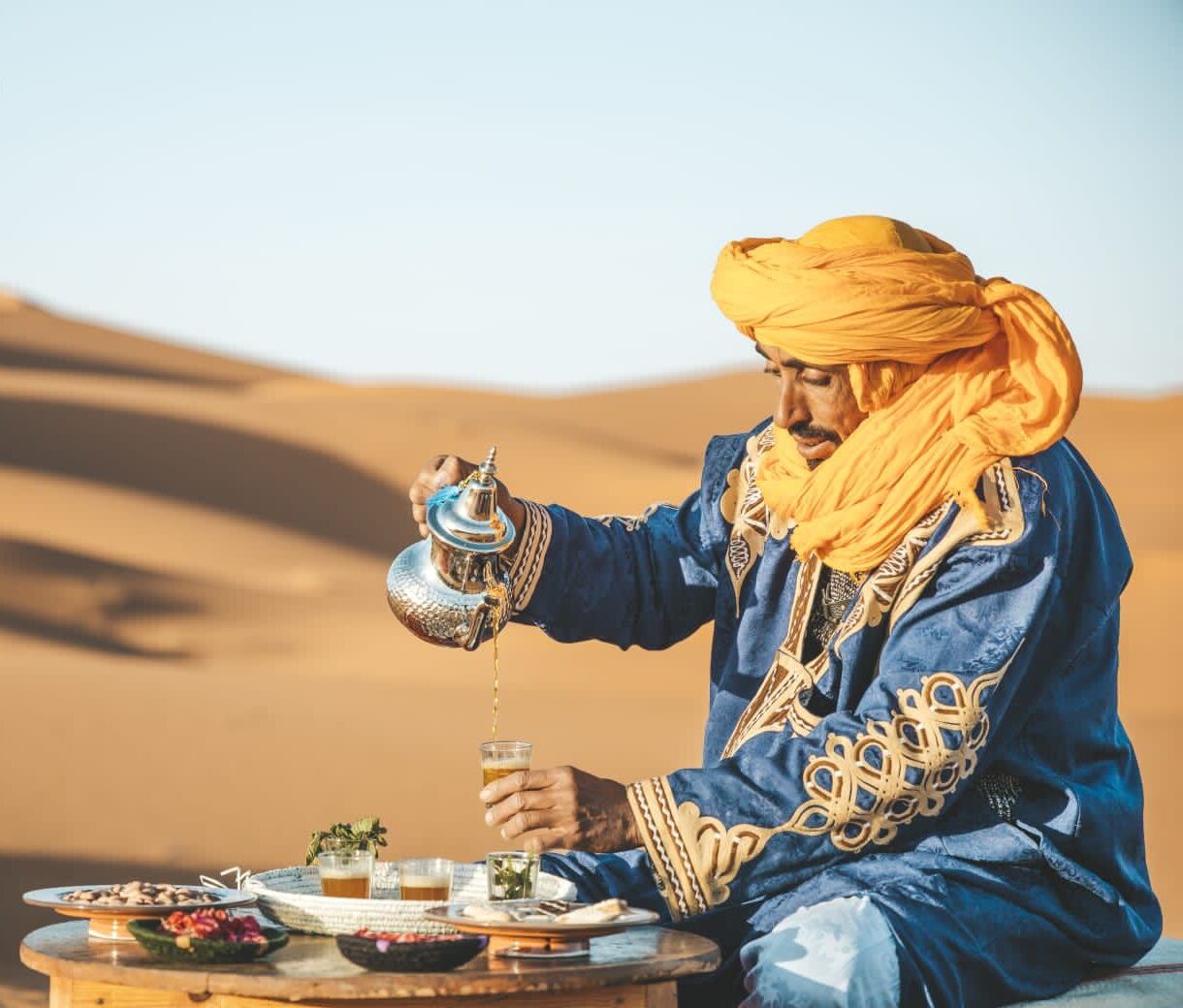
The preparation ritual matters as much as the final product. Fresh mint leaves are combined with strong green tea and sugar (or honey), then hot water is added. The tea is traditionally poured from height into small glasses, creating a slight foam that helps release the mint's aromatics. Watching this performance is part of the experience.
The drink itself is refreshing, mildly sweet, and distinctly mint-forward. After a spiced meal, it provides cleansing and comfort simultaneously. Mint tea aids digestion and is considered beneficial for the stomach—practically and culturally appropriate as a post-dinner drink.
Water and Non-Alcoholic Options
Despite Morocco's location in a Muslim country, high-quality desert camps maintain well-stocked beverage selections. Bottled water is essential (tap water safety varies, and filtered water is provided). Fresh fruit juices, soft drinks, and coffee are typically available.
Moroccan coffee, when offered, deserves attention. This strong, spiced beverage is prepared differently than European-style coffee and provides a different experience entirely.
Wine and Alcoholic Beverages
While alcohol isn't as prominent in Morocco as in some destinations, quality wine is available at most Merzouga desert camps. Moroccan wines, while not internationally famous, are respectable, and international selections are typically offered at luxury establishments like Original Desert Camp. Red wines pair particularly well with the rich, spiced tagines and lamb dishes served in the Sahara, while lighter whites complement the fresh salads and seafood options available at better camps.
Beer is available in most desert camps, though it's consumed more discreetly given Morocco's Islamic cultural context. The local Casablanca and Flag brands are cold, refreshing alternatives to wine, especially after a day of desert exploration under the intense sun.
For those seeking traditional alcoholic beverages, Moroccan pastis (an anise-flavored spirit) and various digestifs may be offered after dinner, though these are less common in desert settings than in coastal towns.
Final Thoughts
Beverages in Merzouga are far more than simple hydration—they're cultural ambassadors that tell the story of Morocco's traditions, geography, and hospitality. Whether you're sipping mint tea under the stars, enjoying fresh-squeezed orange juice at sunrise, or sharing wine with fellow travelers after an unforgettable day in the Sahara, each drink enhances your desert camp experience. At Original Desert Camp, we ensure every beverage choice reflects both authenticity and the comfort you deserve, making your Moroccan adventure as memorable as the landscape itself.