
Merzouga Desert Camp Photography Guide: Capturing the Sahara Perfectly
The Sahara Desert is one of the most photogenic landscapes on Earth, and Merzouga's Erg Chebbi dunes offer an almost otherworldly canvas for photographers of all skill levels. Whether you're a seasoned professional or someone who just loves capturing memories with your smartphone, the desert presents incredible opportunities for stunning imagery. The interplay of light, shadow, texture, and color in this environment is nothing short of magical.
When you stay at a quality Merzouga desert camp like Original Desert Camp, you're not just getting accommodation—you're positioning yourself perfectly for photography throughout the day and night. The camp's strategic location at Erg Chebbi allows guests to capture the dunes from sunrise to starlight, with access to some of the most dramatic perspectives the Sahara has to offer.
Understanding Merzouga's Unique Photography Landscape
Why Merzouga Stands Out for Photography
Merzouga is home to Erg Chebbi, one of Morocco's most visually striking sand dunes. Erg Chebbi translates to "the big dune" in the local Tamazight language, and it's easy to see why. These golden dunes rise dramatically from the desert floor, creating towering walls of sand that can reach heights of 150 meters. The sheer scale and proximity of these dunes to the town make Merzouga a photographer's dream.
Unlike other desert destinations, Merzouga offers several distinct advantages. The dunes are accessible within minutes of any camp, the color palette shifts dramatically throughout the day, and the relatively untouched nature of certain areas means you can find authentic desert moments without excessive crowds. The local Berber culture adds another rich dimension to your photography—from traditional dress and daily life to the ceremonial aspects of desert hospitality.
The Desert's Changing Light
Light in the Sahara is fundamentally different from what you might experience in other landscapes. The dry, clear atmosphere means colors remain vivid and shadows are crisp and defined. There's minimal atmospheric haze compared to many regions, which creates stunning contrast and detail even at great distances. This quality of light is what makes desert photography so compelling—colors appear more saturated, and the three-dimensional quality of the landscape becomes more pronounced.
However, this same clarity can be challenging during midday hours when the sun is directly overhead. The harsh, flat lighting of noon washes out colors and eliminates the dimensional shadows that make desert photography interesting. Understanding how to work with the Sahara's light patterns is essential for capturing images that truly do the landscape justice.
Pre-Trip Photography Planning
Gear Considerations for Desert Photography
Before you pack your bags for Merzouga, think carefully about your photography equipment. The desert environment is unforgiving—sand gets into everything, temperature extremes stress batteries and electronics, and the dry climate can affect lens coatings.
Camera Bodies: Whether you're using a DSLR, mirrorless camera, or smartphone, bring your primary device plus a backup if possible. Modern smartphone cameras are genuinely impressive, and the latest flagship models rival dedicated cameras in many conditions. However, a camera with manual controls gives you more flexibility for the creative shots you'll want to capture.
Lenses: Wide-angle lenses are essential for capturing the grand scale of the dunes. A 16-35mm lens is ideal for expansive landscape shots, while a 70-200mm or telephoto lens helps you compress distant dunes and isolate interesting elements. A standard zoom covering 24-70mm handles most daily situations.
Filters and Protection: Bring a UV filter or protective filter for each lens—these act as safeguards against sand and dust. A polarizing filter dramatically enhances desert sky color and reduces glare. Neutral density filters let you achieve longer exposures, useful for creative dune photography or star trails at night.
Essential Accessories:
- Extra batteries (cold temperatures drain them faster than you'd expect)
- Multiple memory cards with high capacity
- Lens cleaning kit specifically designed for outdoor use
- Tripod (crucial for sunrise, sunset, and night photography)
- Weather protection bag for sandstorms
- Remote shutter release for sharp tripod shots
What to Leave Behind
Paradoxically, less is sometimes more in desert photography. Resist the urge to bring excessive gear. You'll be hiking across sand dunes—every piece of equipment becomes heavier with each step. Original Desert Camp provides comfortable accommodation and facilities, allowing you to store most gear safely and venture out with only essentials for each shoot.
Mastering Light and Time
The Golden Hour at Erg Chebbi
The golden hour—that magical period shortly after sunrise or before sunset—is when Merzouga's dunes truly shine. During these hours, the sun angles across the sand at a low angle, creating dramatic shadows that emphasize the dunes' contours and three-dimensional form. The warm, golden light turns the sand into almost glowing subjects, with color temperatures ranging from pale gold to deep orange depending on atmospheric conditions.
Sunrise is particularly special in the Sahara. Many visitors to Merzouga desert camps wake in the darkness to watch the sun appear over the horizon. If you're staying at Original Desert Camp, you'll have immediate access to prime sunrise locations without the need for lengthy travel. The first light of dawn is often cooler in color temperature, creating subtle blues and purples in shadow areas while the sun itself casts a warm glow.
Sunrise Photography Tips:
- Arrive at your chosen location 20-30 minutes before actual sunrise
- Position yourself so the sun rises behind or to the side of interesting dune formations
- Take images throughout the sunrise process—the light is constantly evolving
- Expose for the sky initially, allowing the foreground to be darker, then adjust as light increases
Sunset presents its own magic. The Sahara's clarity means you can often see the sun setting in vivid detail, without the haze that obscures sunsets in many regions. The light during sunset tends to be warmer than sunrise, with deeper oranges and reds. Clouds on the horizon (when present) become illuminated canvases of color.
Working with Midday Light
Most photographers avoid shooting during midday hours, but the desert challenges this conventional wisdom. While the light is harsh, you can use this to your advantage by seeking out deep shadows and creating high-contrast black-and-white imagery. The bright midday light is also excellent for photographing Berber culture and camp activities—the clarity captures vibrant colors in traditional clothing and textiles.
For color work during midday, focus on details rather than sweeping vistas. Photograph tent textures, traditional crafts, food preparation, or portrait sessions in shade. The absence of harsh shadows in shaded areas creates clean, even light that's flattering for these subjects.
Composition Techniques for Desert Photography
Rule of Thirds and Horizon Placement
While composition rules can be broken effectively, understanding them first makes your images stronger. In desert landscape photography, horizon placement is critical. Rather than placing the horizon in the center of your frame, position it according to what you want to emphasize. If the sky has interesting clouds or color, place the horizon in the lower third. If you want to emphasize the dunes' drama, place the horizon in the upper third.
The rule of thirds suggests placing key elements along imaginary grid lines that divide your frame into nine equal sections. In dune photography, the naturally curving lines of sand dunes often align beautifully with these compositional guidelines.
Creating Depth and Scale
The challenge with photographing massive dunes is conveying their true scale. A photograph of a dune might look like a small hill if there's nothing to show its actual dimensions. Solutions include:
Incorporating People: Include a person in your composition—human scale instantly communicates the dunes' size. This is particularly effective at Merzouga, where you might photograph fellow camp guests, local guides, or even yourself (using self-timer or remote shutter).
Foreground Interest: Include interesting elements in the foreground—perhaps desert vegetation, rocks, or camp structures. This creates layers that make the image feel three-dimensional and helps the viewer understand the vast distances involved.
Layering Dunes: Position yourself so multiple dune ridges are visible, receding into the distance. This layering creates depth through atmospheric perspective and overlapping forms.
The Power of Silhouettes
Desert silhouettes are genuinely powerful. When you expose for a bright sky, the landscape becomes a dark shape, emphasizing form over detail. This works especially well with interesting profiles—a person standing atop a dune, a camel with rider, or a tent structure becomes an evocative shape rather than a detailed subject.
To capture silhouettes: position your subject between you and the light source, expose based on the sky (use spot metering on the brightest part), and allow the foreground to fall into shadow. Backlighting creates rim lighting that further separates your subject from the background.
Capturing Camp Life and Culture
Authentic Moments at Desert Camps
While dramatic landscape shots draw people to desert photography, some of the most memorable images capture camp life and human moments. Original Desert Camp provides authentic Berber hospitality—these genuine interactions and daily routines create powerful photographic subjects.
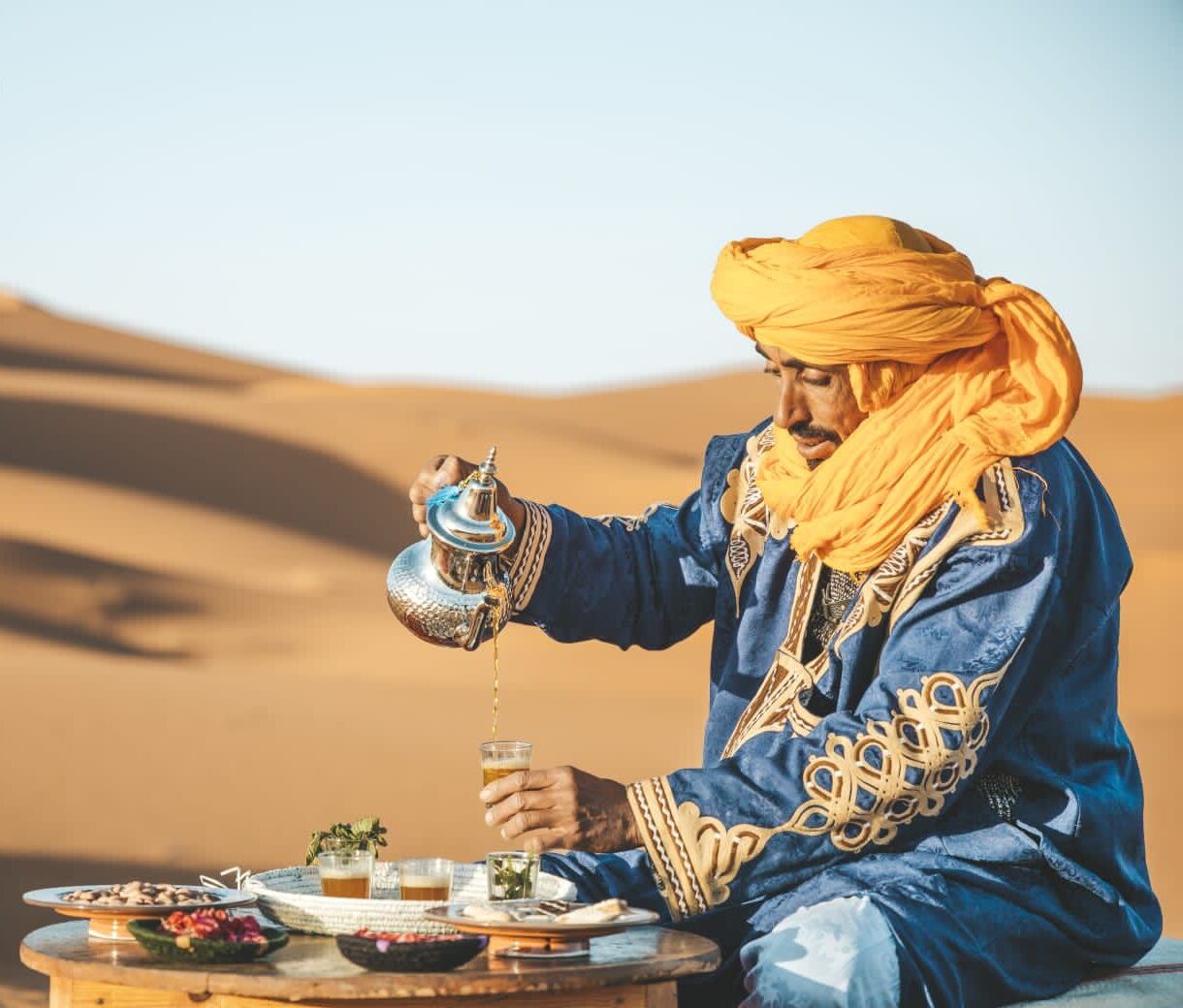
Portrait Photography in Camp: The warm light of late afternoon combined with the desert backdrop creates flattering portrait conditions. Work with camp staff and fellow guests who are comfortable being photographed. Candid moments often surpass posed portraits—photograph people engaged in activities like preparing tea, tending fires, or sharing meals.
Cultural Documentation: Document details that tell stories—henna designs on hands, the intricate patterns of traditional textiles, the preparation of tagine meals, or the arrangement of camp furnishings. These details preserve cultural knowledge and create images with narrative depth.
Responsible Photography Practices
While photographing people and cultural elements is enriching, approach it respectfully. Always ask permission before photographing individuals, particularly those wearing traditional dress who may be more private. Some people may request payment for images; this is a reasonable request reflecting the value of their presence in your photography.
At Original Desert Camp, staff are generally welcoming toward guests' photography, and the camp's management supports cultural exchange. However, context matters—someone engaged in a private moment deserves different treatment than someone performing for guests.
Night Sky Photography
Stargazing and Astrophotography
The Sahara's remote location and lack of light pollution make Merzouga exceptional for night sky photography. The Milky Way is visible from late spring through early autumn, arcing across the sky in breathtaking detail. Even without specialized astrophotography experience, you can capture stunning images of the night sky from a desert camp.
Basic Requirements:
- A camera that allows manual control (smartphones have limitations here)
- A wide-angle lens (14-24mm is ideal)
- A sturdy tripod
- High ISO capability (modern cameras at ISO 1600-3200+ maintain reasonable quality)
Settings for Milky Way Photography:
- Manual mode (M)
- Manual focus set to infinity (or use live view to focus on a bright star)
- Widest aperture available (f/2.8 or wider is ideal)
- ISO 2000-4000 (adjust based on how bright the Milky Way appears)
- Shutter speed around 20 seconds for a 24mm lens (use the 500 rule: 500÷focal length = maximum shutter speed to avoid star trails)
Composition for Night Sky Images: Include landscape elements in the foreground—silhouetted tent shapes, a camp fire, or distinctive dune profiles. These elements ground the image and tell the story of where the sky was photographed. Position the Milky Way's brightest section (often called the "core") according to rule of thirds principles.
Star Trails and Long Exposures
Star trail photography creates mesmerizing images showing stars' apparent movement across the night sky. Capture multiple 30-second exposures (using your camera's interval timer function) of the same composition, then combine them in post-processing using free software like Sequator or Starry Landscape Stacker. The result is concentric circular trails showing Earth's rotation.
This technique works best when stars are visible for extended periods, which means shooting in the deepest part of night, typically between 11 PM and 4 AM. The effort is worth it—star trail images capture something truly special about the desert experience.
Post-Processing Techniques
Editing Desert Photography
The Sahara's colors are natural, but subtle adjustments often enhance them. Raw files (if your camera supports them) provide maximum flexibility in post-processing.
Color Temperature: Sunrise and sunset images often benefit from slight warming, emphasizing the gold and orange tones. Conversely, midday desert light can become overly warm; cooling slightly can feel more balanced.
Vibrance and Saturation: Increase vibrance subtly to enhance the desert's natural colors without making them look artificial. Vibrance targets less-saturated colors , making it ideal for bringing out skin tones in portrait work while boosting the desert's earth tones. Avoid pushing saturation beyond 15-20 points, as the desert's beauty lies in its authenticity.
Contrast and Clarity: A subtle increase in contrast (5-10 points) adds dimension to landscape shots, separating the dunes from the sky. Clarity adjustments should be conservative—too much creates an unnatural, hyper-processed look that contradicts the serene desert aesthetic.
Shadows and Highlights: Use the shadows slider to lift underexposed areas in canyon photography without losing definition. The highlights slider prevents blown-out skies during golden hour, preserving detail in clouds and atmospheric layers.
Cropping for Composition: Sometimes the best edit is a crop. The rule of thirds applies beautifully to desert landscapes—position the horizon in the upper or lower third rather than center for more dynamic images. Tighter crops on dune patterns and textures can isolate the abstract beauty often missed in wider shots.
Most importantly, edit with restraint. The Sahara's raw magnificence needs minimal enhancement; your role as a photographer is to reveal what's already there, not to reinvent it.
Final Thoughts
Photography in the Merzouga desert is an invitation to see the world differently—through light, shadow, and the patient passage of time. Whether you're capturing star trails from your camp, framing the perfect dune landscape, or documenting the human stories within our community, these techniques will help you create images that truly honor the desert's timeless beauty. The best camera is the one you have with you, so bring your equipment, embrace the landscape's challenges, and let creativity guide your lens.