
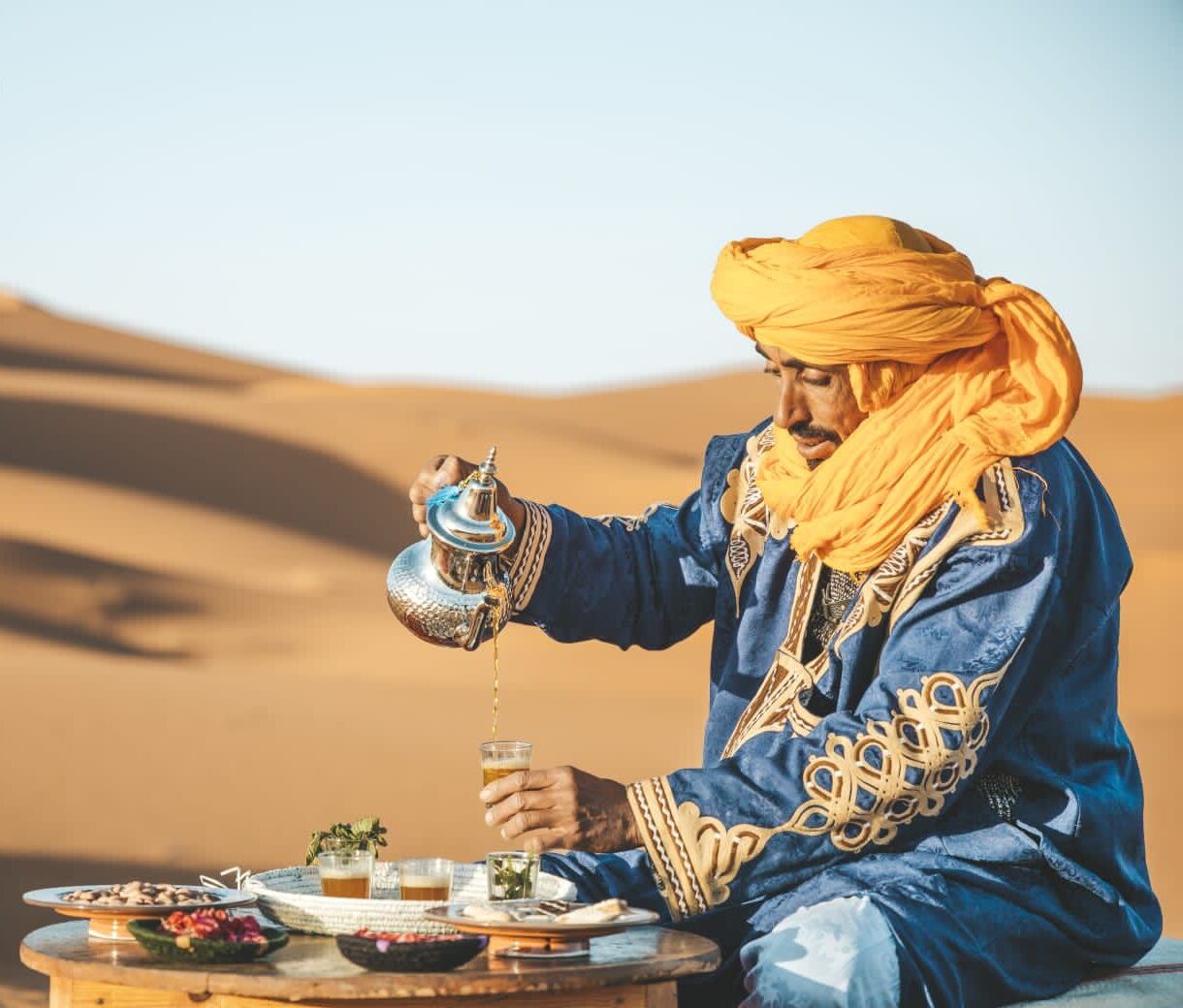
Photography Tips for Your Merzouga Desert Camp: Light, Dunes & Stars
There's something almost magical about the Sahara Desert that makes even casual photographers want to capture every moment. The endless golden dunes, the quality of light that changes by the hour, and the blanket of stars that appears each night—it's a photographer's paradise. Whether you're traveling with a professional DSLR or just your smartphone, the desert around Merzouga offers opportunities for truly stunning images that will transport your viewers straight to the heart of Morocco.
In this guide, I'll share everything you need to know about capturing the essence of your desert camp experience, with practical advice that'll help you move beyond snapshot tourism to create images you'll treasure for a lifetime.
Understanding Merzouga's Unique Lighting Conditions
The Golden Hour is Everything Here
One of the most important lessons about desert photography is understanding how dramatically the light transforms the landscape. In Merzouga, at the edge of Erg Chebbi, the golden hour—that magical window roughly 45 minutes after sunrise and before sunset—is absolutely critical to your photography.
The sand dunes appear almost monochromatic under harsh midday sun, but during golden hour, they transform into a canvas of warm oranges, deep reds, and soft yellows. The shadows become deeper and more pronounced, creating dramatic contrast that adds dimension to otherwise flat terrain. This is when you'll capture the photographs that make people pause and ask, "Where is that?"
When you're staying at Original Desert Camp, you have the advantage of being right where the action happens. You won't need to travel far to catch sunrise or sunset from the dunes—these prime photography times are practically at your doorstep. I recommend setting your alarm without hesitation. Yes, a 4:30 AM wake-up feels early, but watching the sun rise over Erg Chebbi while the sand glows with amber light is worth every lost minute of sleep.
Midday Light: The Challenge and the Solution
Between approximately 10 AM and 4 PM, the sun sits high and harsh overhead. This creates strong shadows and blown-out highlights that can be difficult to work with. However, this doesn't mean you should put your camera away.
Instead, use midday as an opportunity to photograph different subjects. Focus on details—the texture of the sand, close-ups of Berber artifacts in your camp, candid moments of fellow guests interacting with camels, or the architectural details of the camp's traditional structures. These subjects benefit from the crisp, clear light of midday. You can also explore shaded areas within the camp or beneath the dunes' steeper sides where dramatic shadows create their own photographic interest.
The Blue Hour: An Underrated Gem
The period just after sunset, when the sky turns deep blue before the stars truly emerge, offers a unique quality of light that many photographers overlook. During this window—typically 20-40 minutes after sunset—the remaining light balances beautifully with the darkening sky. The dunes take on a cool, mysterious tone that's completely different from golden hour but equally captivating.
This is the perfect time to photograph your camp with lights beginning to twinkle and the landscape still partially visible. You'll want a tripod for this, as light levels are low, but the results are worth the extra effort.
Composition Techniques for Desert Landscapes
The Rule of Thirds in the Dunes
The rule of thirds is a fundamental composition principle that applies beautifully to desert photography. Imagine dividing your frame into nine equal parts using two horizontal and two vertical lines. Placing your point of interest—whether that's a camel, a person, or a striking dune formation—along these lines or at their intersections creates more dynamic, engaging compositions than centering your subject.
For dune photography specifically, consider placing the horizon along the upper third line rather than in the center. This emphasizes the vast landscape and sky, which is precisely what makes desert photography special. If the sky is particularly dramatic or rich with color during sunset, it might deserve even more space—try placing the horizon at the lower third instead.
Leading Lines and Paths
The desert is full of natural leading lines. Footprints in the sand, the shadows cast by dunes, paths between camps, and even the natural contours of the sand itself can guide a viewer's eye through your photograph. Look for these elements and position yourself so they lead from the foreground toward your main subject.
When you're on a camel trek or walking through Erg Chebbi from Original Desert Camp, pay attention to the trails your group creates. These footprints, especially when lit by golden hour light, can add wonderful depth and storytelling to your images.
Foreground, Midground, Background
Strong landscape photography typically includes distinct layers. In the desert, this might mean having something in sharp focus in the immediate foreground (perhaps a rock or interesting sand formation), the main landscape as your midground (the dunes themselves), and the sky as your background.
This layering creates depth and prevents your images from looking flat. When you're positioned on a lower dune looking toward higher ones, or when you include a person in the foreground with expansive dunes behind them, you're using this technique naturally.
Essential Gear for Desert Photography
Camera Equipment Considerations
You don't need expensive equipment to capture beautiful desert photographs. A smartphone with a good camera can produce stunning results, and many professional photographers now include smartphone shots alongside their DSLR or mirrorless work.
However, if you're carrying a dedicated camera, bring:
- A versatile zoom lens (something in the 24-70mm range is ideal for landscape and lifestyle shots)
- A wide-angle lens (14-24mm) for dramatic landscape shots that capture the vastness of Erg Chebbi
- A tripod for sunrise, sunset, and nighttime photography
- Spare batteries and memory cards (always more than you think you'll need)
- A lens cleaning kit (sand is unavoidable, and you'll need to clean your lens frequently)
- Lens filters, particularly a polarizing filter to enhance sky color and reduce glare off the sand
Protection from Sand and Heat
The Sahara is harsh on equipment. Sand particles are finer than you'd expect, and they get everywhere. Protect your gear by:
- Keeping your camera in a protective bag when not actively shooting
- Changing lenses quickly and deliberately to minimize sand exposure
- Bringing a microfiber cloth for regular lens cleaning
- Considering a weather-sealed camera body if you're investing in new equipment
- Using lens caps and rear caps without fail
The heat is also a consideration. Your camera and battery will operate less efficiently in extreme heat. Keep equipment in shade when possible, avoid leaving cameras in direct sun between shots, and have extra batteries on hand since heat drains them faster.
Mastering the Golden Hour at Your Merzouga Camp
Sunrise Photography Logistics
Plan to be out on the dunes at least 15 minutes before sunrise. You'll need this time to position yourself, scout compositions, and adjust your camera settings as the light gradually changes.
At Original Desert Camp, guides are accustomed to early-morning photography expeditions and will help you reach prime locations. The advantage of staying at a dedicated camp is that you can coordinate with staff—they'll let you know the precise sunrise time and can guide you to spots that maximize photographic potential based on the season and current conditions.
Bring warm clothing (mornings in the desert are surprisingly cool, even in summer), plenty of water, and perhaps a thermos of coffee. You'll be most productive photographically if you're comfortable and hydrated.
Sunset Positioning Strategy
Unlike sunrise, you'll likely have most of the day to scout sunset locations. As afternoon progresses, observe how light hits different parts of the landscape. Note which dunes receive the most dramatic backlighting, where shadows fall, and how the landscape transforms as the sun descends.
Position yourself so the sun is to your side or behind your subject rather than directly behind the camera—this creates rim lighting and backlit effects that add drama and dimension. If you're photographing people (fellow guests, guides, or Berber staff members), this side lighting is particularly flattering and creates that iconic silhouette effect that desert sunset photos are known for.
Capturing Stars and Night Sky Photography
Understanding Merzouga's Dark Skies
One of the greatest gifts of desert camping at locations like Merzouga is the absence of light pollution. Erg Chebbi is far from major cities, which means the night sky reveals itself in stunning detail. On clear nights, you'll see the Milky Way stretching across the sky with a clarity that most city dwellers never experience.
Camera Settings for Starry Skies
Photographing the night sky requires specific camera settings. If you're using a dedicated camera:
- Use manual mode (M) for complete control
- Set your aperture as wide as possible (f/1.4 to f/2.8 if your lens allows it)
- Use a high ISO (typically 1600-3200, depending on your camera's performance at high ISO)
- Shutter speed depends on the "500 rule": divide 500 by your focal length to determine maximum shutter speed before stars begin to trail. For a 24mm lens, you'd use roughly 20 seconds.
- Set focus to manual infinity focus (autofocus won't work in darkness)
A tripod is absolutely essential for night sky photography—handholding is impossible with these long exposures.
Composition with Stars
The same compositional principles apply to night photography. Include foreground elements—your camp's tents, a camel, a person looking up at the stars—to create interest and scale. A silhouetted tent against the Milky Way tells a story. A guide standing with arms raised toward the stars creates a narrative about wonder and connection to the land.
Arrive at your photography location before full darkness falls so you can position yourself properly. Your eyes will adjust to the darkness gradually, revealing more stars over 20-30 minutes.
Post-Processing Night Sky Images
Smartphone photos of stars are challenging because phones typically can't gather enough light. However, computational photography is improving rapidly. Apps like Slow Shutter Cam or NightCap allow longer exposures on smartphones.
With DSLR images, you'll likely want to process your night sky photos. Modest increases in contrast, clarity, and vibrance can make the Milky Way pop without looking artificial. Be careful not to oversaturate—the real night sky is spectacular enough without exaggeration.
Photography of Camp Life and Activities
Candid Moments and Lifestyle Shots
Some of the most memorable images from your desert camp experience won't be landscapes at all—they'll be candid moments. A child's wonder meeting a camel for the first time. Hands preparing traditional Berber tea. The concentrated expression of someone learning to tie a turban. Laughter shared around a campfire dinner.
For these moments, keep your camera ready but not intrusive. Try to blend in rather than announce every shot. Use longer focal lengths (70mm+) to capture candid expressions without being directly in someone's face. The best lifestyle photography often happens when subjects forget the camera is there.
Camel Trekking Photography
Camel trekking is one of the primary activities at desert camps, and it offers unique photo opportunities. Position yourself or ask your guide to position the group so the morning or evening light hits everyone beautifully. A silhouetted camel and rider against a golden sky is an iconic desert image.
When you're mounted on a camel, be mindful of safety first—don't become so absorbed in photography that you lose your balance. Many of the best camel trek photos are taken when you dismount at scenic spots, allowing you to use both hands and achieve sharper, better-composed images.
Camp Architecture and Details
The traditional structures of Original Desert Camp—the Berber tents, the carpets, the fire, the gathering spaces—are photogenic subjects in themselves. Photograph these details in different light conditions. Morning light streaming through tent openings. Candlelight during evening gatherings. The intricate patterns of traditional textiles. These details transport viewers to the experience even more than grand landscape shots sometimes do.
Practical Tips for Desert Photography Success
Manage Your Battery and Storage
Desert photography can consume battery power quickly, especially with a zoom lens that requires more power for autofocus and image stabilization. Carry at least two fully charged batteries and keep a spare in your pocket rather than a bag—your body heat helps maintain battery efficiency in cold mornings.
Similarly, memory cards fill faster than you'd expect. A single sunrise might yield 100-200 images. Carry multiple cards, or if using smartphones, regularly transfer images to cloud storage or a portable drive so you don't run out of space.
Protect Your Eyes During Sunrise/Sunset
Never look directly at the sun through your camera viewfinder, even during sunrise or sunset.