
Merzouga Golden Camp Morocco: Everything You Need to Know
When you picture a desert escape that feels like stepping into another world, Merzouga likely comes to mind. This remote Moroccan village sits at the gateway to the Sahara's most magnificent sand dunes, and it has become one of North Africa's premier destinations for travelers seeking an authentic desert experience. The golden camps scattered across this region offer a unique blend of luxury and adventure, allowing visitors to experience the raw beauty of the Sahara without sacrificing comfort.
But what exactly makes a Merzouga golden camp worth visiting? What should you expect when you arrive at these desert havens? And how do you choose the right camp for your needs? This comprehensive guide will answer all these questions and help you plan an unforgettable desert experience.
Understanding Merzouga: The Gateway to Erg Chebbi
What Makes Merzouga Special
Merzouga is a small village in southeastern Morocco, located at the edge of Erg Chebbi, one of the largest and most spectacular sand dune fields in the Sahara Desert. While Morocco has several desert regions, Merzouga stands out for several compelling reasons.
The dunes here are genuinely impressive—some reaching heights of 150 meters or more. Unlike some desert areas that feel sparse and monotonous, Erg Chebbi presents a dramatic landscape of golden waves that shift with the light throughout the day. The sand itself has that distinctive golden hue that photographers dream about, especially during sunrise and sunset when the colors become almost supernatural.
Beyond the dunes, Merzouga serves as a cultural crossroads. The village is home to both Amazigh (Berber) communities and Arab populations who have maintained desert traditions for centuries. This cultural richness means your golden camp experience isn't just about scenery—it's about connecting with real people and genuine desert heritage.
Geography and Climate
Merzouga sits at approximately 800 meters elevation, which moderates temperatures compared to lower desert regions. The village receives minimal rainfall, but the elevation means nights can get surprisingly cool, even during warm months. During winter (November to March), temperatures can drop to near freezing at night, while daytime temperatures remain pleasant in the 15-20°C range.
Summer temperatures in Merzouga can exceed 40°C during the day, though nights remain cooler due to the elevation and the desert's lack of heat retention. Spring (March to May) and fall (September to October) offer the most comfortable conditions for desert exploration.
The Golden Camp Experience: What to Expect
Accommodation Standards and Luxury Levels
When people refer to a "golden camp" in Merzouga, they're typically discussing mid-range to luxury desert camps that offer comfortable, well-appointed accommodations rather than basic overnight setups. These camps have evolved significantly over the past decade, moving beyond simple tourist traps to become genuine hospitality destinations.
Most golden camps, including established properties like Original Desert Camp, feature:
- Private or shared Berber-style tents with comfortable bedding and heating for cool nights
- En-suite bathrooms with hot water—a genuine luxury in the desert
- Dining areas serving both traditional Moroccan cuisine and international options
- Common spaces for socializing and enjoying the landscape
- Modern amenities like electricity and sometimes WiFi, balanced with authentic desert atmosphere
The key to a quality golden camp is finding that perfect balance between comfort and authenticity. You want enough amenities to sleep well and stay clean, but not so much technology that you lose the sense of being in the Sahara.
Daily Activities and Experiences
A typical day at a Merzouga golden camp revolves around the dunes and the desert rhythm. Here's what to expect:
Early Morning: Most camps offer sunrise treks onto the dunes, either by camel or on foot. Watching the sun emerge over the sand dunes while temperatures are still cool is genuinely magical. Many camps, like Original Desert Camp, time these excursions to catch the light when it's most dramatic.
Daytime: After breakfast, you might rest during the hottest hours, explore the village, visit local markets, or take photography walks across the dunes. Some camps offer sandboarding for those seeking a more adventurous activity.
Afternoon: This is typically the quietest time as heat peaks. Many visitors use this time for rest, reading, or personal exploration of the surrounding area.
Evening: This is when the social magic happens. As temperatures cool, the camp comes alive. Guests gather for dinner, local musicians perform traditional music, and the genuine hospitality of Berber hosts creates an atmosphere that's hard to replicate elsewhere.
Night: Clear skies mean incredible stargazing. The lack of light pollution around Merzouga makes it one of the best places on Earth to see the Milky Way and constellations. Many camps offer stargazing sessions with knowledgeable guides.
Choosing Your Perfect Golden Camp
Key Factors to Consider
Location Relative to Dunes: Not all camps in Merzouga are equal distances from the most impressive dunes. Original Desert Camp's location at Erg Chebbi provides immediate access to the main dune field, minimizing travel time for early morning excursions.
Authenticity vs. Luxury: Consider how much traditional experience you want versus modern comfort. Some travelers want a more "raw" desert experience with basic amenities, while others prefer camps that blend Berber aesthetics with contemporary comfort.
Group Size and Atmosphere: Some golden camps cater to large tour groups and can feel impersonal, while others intentionally keep guest numbers low for a more intimate experience. Consider whether you're seeking a social atmosphere or privacy.
Included vs. Additional Activities: Understand what's included in your package. Most camps include dinner, breakfast, and a camel trek, but some charge extra for activities like sandboarding, desert guides, or special meals.
Staff Expertise: The quality of your experience largely depends on the knowledge and warmth of the camp staff. Camps with experienced guides, many of whom have grown up in the region, provide deeper cultural insights.
Sustainability Practices: Increasingly, travelers care about environmental impact. Ask about the camp's water usage, waste management, and relationships with local communities.
Planning Your Merzouga Desert Adventure
Best Times to Visit
Spring (March to May): This is arguably the ideal season. Temperatures range from 15-30°C, wildflowers sometimes bloom, and the light is consistently beautiful. It's peak season, so book well in advance.
Fall (September to October): Similar to spring, with comfortable temperatures and fewer crowds than spring. September can still be warm, but by October, conditions are ideal.
Winter (November to February): Cool nights (sometimes near freezing) but mild, pleasant days around 18-22°C. Less crowded and still beautiful, though you'll need warmer clothing for evenings.
Summer (June to August): Daytime temperatures often exceed 40°C. It's possible to visit, and some prefer the extreme heat as a bucket-list challenge, but it's genuinely uncomfortable for most travelers.
How to Get There
Merzouga isn't a quick airport hop—that's part of its charm. Most visitors fly into Fez or Marrakech and make a 2-3 day road journey through Morocco.
From Fez: The drive takes approximately 12-14 hours depending on route and stops. Most travelers prefer breaking this into 2-3 days, exploring Ifrane ("Switzerland of Morocco"), Midelt, and the Ziz Valley along the way.
From Marrakech: This is slightly longer at 14-16 hours, but the route through the Atlas Mountains offers incredible scenery. The famous Todra and Dades Gorges provide spectacular stopping points.
From Ouarzazate: This is the most direct route (8-10 hours) if you're already in southeastern Morocco, passing through the Atlas Mountains and the stunning Draa Valley.
Most golden camps, including Original Desert Camp, can arrange transportation from major cities. While self-driving is possible, hiring a driver allows you to enjoy the landscape and navigate Morocco's varied road conditions safely.
Essential Packing List
Clothing:
- Light, breathable clothing for hot days
- A lightweight sweater or fleece for cool evenings
- A warm jacket for winter visits or cold desert nights
- Comfortable hiking shoes for dune walking
- Sandals or comfortable camp shoes
- A wide-brimmed hat and sunglasses
- A scarf for protection from sun and wind
Health and Comfort:
- High SPF sunscreen (essential)
- Lip balm with SPF
- Moisturizer for dry desert air
- Basic medications and any prescriptions
- Toiletries (though most camps provide basics)
Photography:
- Camera or smartphone with good battery capacity
- Extra batteries or portable charger
- A tripod for sunset/sunrise or night sky photos
- Lens cleaning cloths (sand is abrasive)
Miscellaneous:
- A headlamp or flashlight for navigating camp at night
- Earplugs if you're light sleeper (desert can be quiet in unusual ways that some find disturbing)
- A journal or notebook
- Binoculars for wildlife observation
- Travel insurance documents
What a Night at Original Desert Camp Looks Like
While each golden camp in Merzouga has its own character, Original Desert Camp exemplifies what makes this region special. From arrival through departure, the experience demonstrates why visitors return again and again.
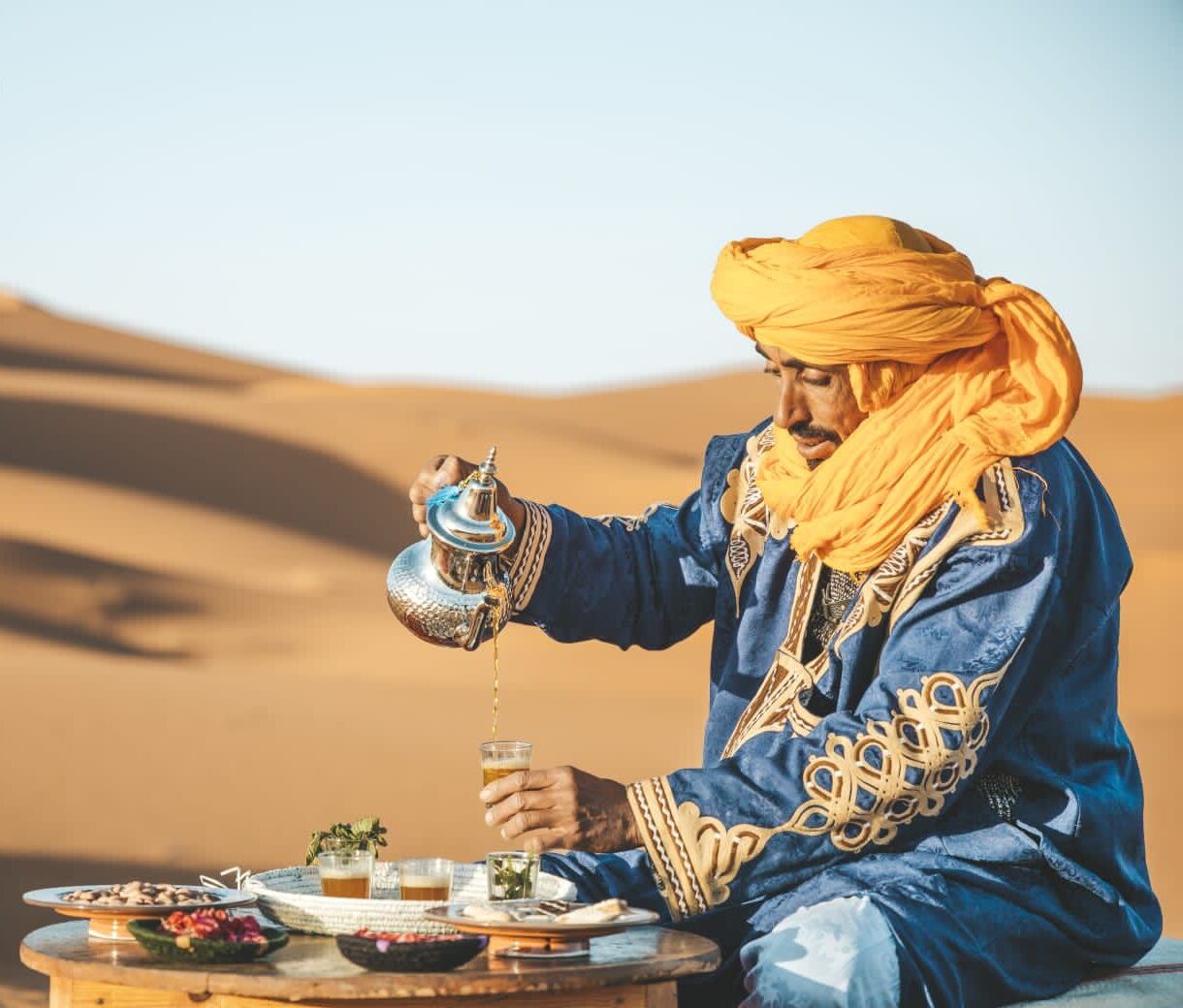
Upon arrival, you're greeted with traditional Moroccan tea and mint leaves—not just a beverage, but a ritual that signals your entry into a different pace of life. The camp staff, many with family connections to the Merzouga region, provide warm hospitality that never feels forced or performative.
Afternoons might include a guided camel trek across Erg Chebbi's main dune field. Unlike rushed commercial operations, Original Desert Camp structures these to allow genuine connection—you move at a pace that lets you absorb the landscape, and guides share knowledge about the ecosystem and local Berber traditions.
As sunset approaches, the sky transitions through colors that seem impossible—golden, pink, orange, and deep blue, all layering the sky simultaneously. Dinner involves traditional Moroccan dishes, often including tagine (slow-cooked stews) and fresh bread, eaten communally in a way that creates natural connections between guests.
After dark, the lack of light pollution reveals the night sky in spectacular fashion. Original Desert Camp guides can point out constellations and discuss the astronomical significance that nomadic peoples have recognized for millennia.
Cultural Respect and Responsible Tourism
Understanding Berber Traditions
The communities around Merzouga have inhabited these regions for centuries, and modern tourism has brought both benefits and challenges. The best golden camps, including Original Desert Camp, maintain respectful relationships with local communities and employ primarily local staff.
When visiting, remember:
- Ask permission before photographing people. While dramatic portraits are tempting, basic human respect comes first.
- Learn some Arabic or Amazigh greetings. A simple "Salam alaikum" (hello) shows respect.
- Participate genuinely in cultural activities. When invited to share a meal or listen to music, engage authentically rather than treating it as a performance.
- Support local economy. Buy crafts from local artisans, use local guides, and ensure your tourism dollars benefit the community.
Environmental Responsibility
The Sahara's fragile ecosystem requires respectful treatment:
- Stay on established paths to avoid disrupting sensitive vegetation and wildlife
- Pack out all waste—the desert should leave no trace of your visit
- Use water conservatively—it's precious in the desert
- Support camps with sustainable practices—inquire about how camps source water, manage waste, and minimize environmental impact
Common Questions About Merzouga Golden Camps
Is Camel Trekking Necessary?
Not at all. While camel trekking is iconic and recommended for most visitors, it's entirely optional. Many people trek by foot across the dunes, which offers its own rewards and a more intimate connection to the landscape. Some prefer simply exploring the dunes at their own pace.
How Cold Do Desert Nights Get?
This varies seasonally, but even summer nights cool to 15-20°C at elevation. Winter nights can drop to 5°C or below. Quality camps provide blankets and heating; bring a warm layer even in summer months.
Will I Be Able to Sleep Comfortably?
Most modern golden camps provide surprisingly comfortable bedding. If you're concerned, mention this when booking—many camps offer extra blankets and even hot water bottles. Earplugs help if you're sensitive to unfamiliar sounds.
Is the Food Vegetarian-Friendly?
Yes. Moroccan cuisine includes many vegetarian options, and most camps can accommodate dietary preferences when notified in advance. Tagines, couscous, fresh vegetables, and bread are staples, and chefs are usually happy to prepare vegetarian versions of traditional dishes.
What's the Best Time to Visit?
October to April offers the most comfortable temperatures (15-25°C during the day). May to September is hot but less crowded and more affordable. Each season has its charm—spring brings wildflowers, while winter offers clear starlit skies perfect for photography.
Can I Extend My Stay?
Absolutely. Many visitors arrive planning for one night and extend to two or three. The desert's magic deepens with time, and longer stays allow for different camel routes, deeper connections with guides, and a slower pace that lets you truly absorb the experience.
Final Thoughts
A night in Merzouga's golden camps is more than just accommodation—it's a transformative encounter with one of Earth's most mesmerizing landscapes. Whether you're watching the sunset paint the dunes amber, falling asleep under a blanket of stars, or sharing mint tea with locals, these moments create memories that linger long after you've returned to everyday life. The desert's timeless beauty, combined with the warmth of Moroccan hospitality, makes Merzouga an essential destination for any traveler seeking authenticity and wonder.