
Merzouga Heritage Camp: History, Culture and the Living Desert Tradition
When most people think of Morocco, they envision bustling medinas, blue-painted streets, and ornate palaces. But venture southeast to the edge of the Sahara, and you'll discover something equally captivating—a place where ancient traditions still pulse through the sand dunes, where the rhythm of life hasn't changed for centuries, and where hospitality remains a sacred covenant passed down through generations.
Merzouga, a small village on the edge of Erg Chebbi, represents the beating heart of Saharan culture. A Merzouga heritage camp isn't just accommodation; it's a gateway into a world that most travelers only read about. This article explores the rich history, vibrant culture, and living traditions that make staying at a Merzouga traditional camp such a transformative experience.
Understanding Merzouga: Morocco's Gateway to the Sahara
The Geography and Location
Merzouga sits at approximately 1,400 meters above sea level, positioned on the edge of Erg Chebbi—one of the most spectacular sand sea formations in the Sahara Desert. The name "Erg" comes from Arabic and refers to a large area of sand dunes, and Erg Chebbi spans roughly 160 square kilometers of towering dunes, some reaching heights of 150 meters.
The village itself is modest by modern standards, with a population of around 3,000 people. Yet its significance far exceeds its size. Merzouga serves as the primary entry point for visitors seeking authentic desert experiences, making it the natural hub for Merzouga Berber camps and traditional accommodation options.
Historical Significance
The region's history is deeply intertwined with trans-Saharan trade routes that flourished for over a thousand years. Merchants, caravans, and nomadic tribes once traversed these sands, trading salt, gold, spices, and other precious goods. Timbuktu, located far south in Mali, was connected to Morocco through these very routes, and Merzouga was a crucial waypoint in this vast commercial network.
The Berber people have inhabited these desert regions for millennia. Unlike the nomadic Bedouins of the Arabian Peninsula, Moroccan Berbers developed sophisticated agricultural, herding, and trading systems adapted to the harsh desert environment. Their presence predates Arab arrival in North Africa by centuries, and their cultural identity remains distinct and cherished.
The Berber People: Guardians of Desert Heritage
Who Are the Berbers?
The Berber people, who call themselves "Imazighen" (meaning "free people" in their native Tamazight language), are the indigenous inhabitants of North Africa. They've occupied these lands for at least 3,000 years, developing their own language, customs, traditions, and social structures.
In Merzouga and surrounding areas, the primary Berber groups include the Ait Atta and the Ait Ismail, both known for their pastoral heritage and deep desert knowledge. These communities maintained their independence and distinct cultural identity even during periods of Arab and European influence, demonstrating remarkable cultural resilience.
Traditional Lifestyles
Historically, Berber communities in the Merzouga region practiced a semi-nomadic lifestyle. Families would migrate seasonally with their herds of goats, camels, and sheep, following water sources and grazing lands. This nomadic tradition shaped every aspect of their culture—from architecture (the design of tents) to social structures to food preparation methods.
Today, while many Berbers have settled permanently, these traditional practices remain culturally significant. The skills of navigation, animal husbandry, desert survival, and resource management are still valued and transmitted across generations. When you stay at a Merzouga heritage camp or traditional Berber camp, you're witnessing these time-honored practices firsthand.
Language and Oral Traditions
Tamazight, the Berber language, is integral to understanding their culture. The language contains no written script for centuries (though a script called Tifinagh exists and is increasingly taught), so knowledge has been preserved through oral traditions. Storytelling, poetry, songs, and proverbs form the backbone of Berber cultural transmission.
Many guides and staff at Merzouga traditional camps are fluent in Tamazight, French, and Arabic, often English as well. They're not merely translators but cultural ambassadors, capable of explaining the deeper meanings behind customs, songs, and traditions that visitors encounter.
The Authentic Merzouga Camp Experience
What Makes a Heritage Camp Different
A genuine Merzouga heritage camp differs significantly from standard tourist hotels. Rather than attempting to replicate "luxury" through modern amenities, authentic camps honor traditional Berber architectural and hospitality principles while providing reasonable comfort.
Original Desert Camp, for instance, embodies this philosophy perfectly. Located at the heart of Erg Chebbi, it features traditional kasbahs and Berber tents designed according to centuries-old principles. The layout respects traditional spatial arrangements, the decor incorporates authentic crafts, and the hospitality models genuine Berber customs rather than manufactured "exotic" experiences.
Traditional Architecture and Design
Berber tents, known locally as "khayma" or "tipi," are architectural marvels developed through generations of desert living. The dark fabric (traditionally woven from camel or goat hair) is specifically chosen to retain heat during cold desert nights and reflect sunlight during scorching days. The tent's tapered design allows for efficient water drainage during rare but intense desert storms.
The interior arrangement follows traditional principles: a central living area for gathering and meals, with sleeping areas sectioned off by woven dividers. Handmade carpets, cushions, and blankets—often created by the very families running the camp—provide both comfort and authentic cultural representation.
Modern heritage camps like Original Desert Camp have thoughtfully adapted these traditional designs. They maintain authentic aesthetics while introducing conveniences like private bathrooms, comfortable mattresses, and heating systems. This balance allows visitors to experience genuine culture without sacrificing reasonable comfort.
Daily Rhythms and Routines
Staying at a Merzouga heritage camp means synchronizing with desert rhythms that have governed life here for centuries. Days begin early, often before sunrise. Some camps organize pre-dawn camel treks to witness the sunrise across the dunes—a routine that mirrors traditional herding practices.
Meals follow traditional patterns, with slow-cooked tagines, fresh bread baked in communal ovens, and mint tea served throughout the day. Food holds ceremonial significance in Berber culture; sharing meals is how trust and relationships are built. When you sit down to eat at a Merzouga traditional camp, you're participating in a cultural practice that predates Islam itself.
Evenings bring people together around fires (or modern equivalents). Storytelling, music, and dance are traditional evening activities. Gnaoui music, with its hypnotic rhythms and spiritual undertones, often features at camps. Belly dance is sometimes performed, though it's important to understand this as an artistic tradition rather than a tourist spectacle.
Living Desert Traditions You'll Experience
Camel Trekking: More Than Transportation
Camels have been central to Saharan life for over 2,000 years. These remarkable animals can survive weeks without water, navigate by instinct across featureless dunes, and carry substantial loads. For Berbers, camels were (and are) essential for trade, transportation, and sustenance.
When you trek across Erg Chebbi on camelback from a Merzouga heritage camp, you're not just participating in a tourist activity. You're engaging in a practice that remains fundamental to desert life. Experienced guides understand camel behavior, desert navigation, and the physical demands of such journeys. They know where water sources are located, which dune routes are safest, and how to read weather patterns—knowledge accumulated over lifetimes.
Traditional Crafts and Artisan Skills
Berber craftspeople are renowned throughout the world for their work: carpet weaving, pottery, leatherwork, and jewelry making. These aren't hobby crafts; they represent serious artistic traditions with specific techniques passed through families over generations.
Many heritage camps employ local artisans or facilitate interactions with craftspeople. At Original Desert Camp, you might meet women weavers creating traditional Berber carpets using techniques unchanged for centuries. These aren't mass-produced items sold in tourist markets; they're genuine artisanal creations. Understanding the hours of labor involved—sometimes a single carpet requires months of work—provides profound appreciation for the artistry.
Culinary Traditions
Berber cuisine is deeply tied to available resources and the seasons. Dates, grains, legumes, and preserved goods form the foundation of traditional diet, supplemented by meat from livestock and wild game when available. Cooking methods developed to maximize fuel efficiency and minimize water use.
The tagine, that iconic conical cooking vessel, isn't merely decorative. It's a practical solution to desert cooking challenges, allowing slow-cooking with minimal fuel while conserving water through condensation. When a Merzouga traditional camp chef prepares food in authentic tagines, they're employing real culinary science developed through centuries of necessity.
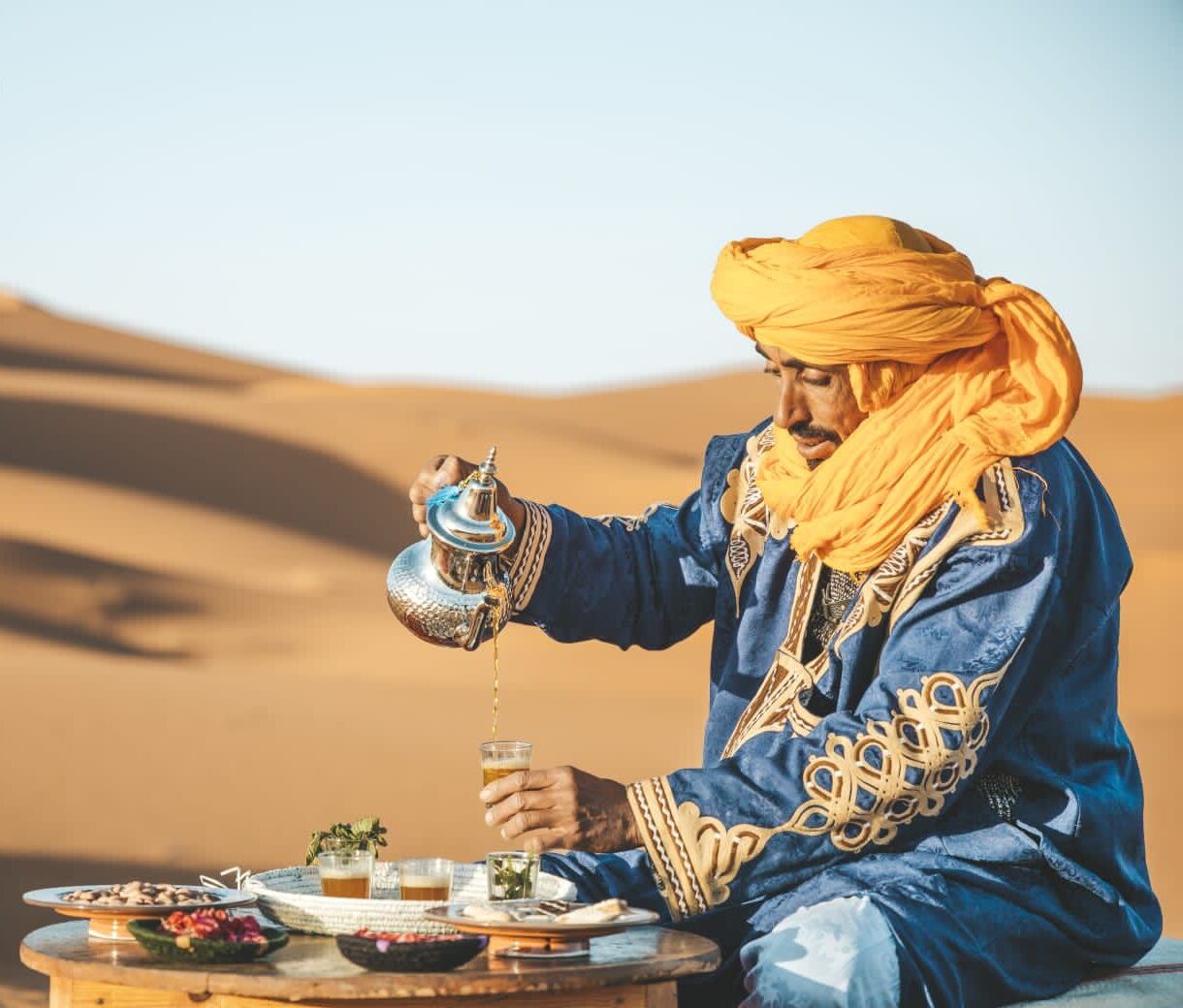
Mint tea (called "atay"), served in ornate glasses, represents hospitality itself in Berber culture. The ritual of tea preparation and consumption is ceremonial, a moment for conversation, negotiation, and relationship-building. Drinking tea at a camp isn't a quaint tourist moment; it's participation in an essential social practice.
Herding and Animal Husbandry
While most Merzouga residents are now settled, herding practices remain culturally significant and are still actively practiced in surrounding areas. Some heritage camps maintain small herds of goats or sheep, and learning to work with these animals provides insight into traditional livelihoods.
Understanding how Berbers adapted to desert conditions through animal husbandry reveals their ingenuity. Different animal species are suited to different microhabitats and seasonal patterns. The knowledge of which animals to keep, where to find grazing, and how to sustain herds through droughts represents accumulated wisdom of immeasurable value.
The Changing Face of Merzouga
Modernization and Cultural Preservation
Merzouga faces the universal challenge of modernization. Young people increasingly migrate to cities for education and employment opportunities. Internet and mobile technology bring global influences. Tourism, while economically beneficial, can sometimes threaten authentic cultural practices if not managed thoughtfully.
However, communities in Merzouga have demonstrated remarkable commitment to preserving their heritage. Many families actively teach traditional languages, crafts, and customs to younger generations. They view tourism not as cultural threat but as economic opportunity that allows them to maintain their way of life on their own terms.
Responsible heritage camps play a crucial role in this preservation. By employing local staff, sourcing local materials, and prioritizing authentic cultural representation over manufactured exotic experiences, camps like Original Desert Camp contribute to sustainable cultural tourism that benefits the community while preserving traditions.
Economic Opportunities and Challenges
Tourism provides vital economic opportunities for Merzouga residents. It creates jobs directly (guides, cooks, hospitality staff) and indirectly (craft producers, suppliers, transporters). For families, this income often means they can keep children in school, access healthcare, and maintain their cultural lifestyle.
However, reliance on tourism also creates vulnerabilities. Economic fluctuations, seasons, and global circumstances (like pandemic travel restrictions) significantly impact incomes. Most successful Merzouga heritage camps balance tourism revenue with other economic activities, ensuring community stability independent of visitor numbers.
Planning Your Merzouga Heritage Camp Experience
Best Times to Visit
Desert conditions dramatically affect the experience. Summer temperatures (June-August) regularly exceed 40°C (104°F), making outdoor activities challenging and uncomfortable. Winter (December-February) brings cooler, more pleasant conditions, though nights can drop near freezing.
Spring (March-May) and autumn (September-November) offer ideal conditions: comfortable daytime temperatures, cool evenings, and lower precipitation likelihood. These seasons also align with traditional activities (spring lambing, autumn harvest), allowing you to witness culturally significant events.
What to Expect and How to Prepare
Arriving at a Merzouga heritage camp for the first time requires mental preparation. The environment is stark, beautiful, and utterly different from most travelers' experiences. Dust is unavoidable; running water may be limited; the silence and isolation can be profound.
Physical preparation matters too. Camel trekking uses different muscle groups than most daily activities, resulting in soreness. Desert sun exposure requires strong sunscreen, hat, and sunglasses. The heat, altitude, and physical activity demand hydration beyond what you might expect.
Emotionally and culturally, approaching the experience with respect and genuine curiosity enhances everything. Rather than viewing the camp as a stage for exotic photos, engage with guides, ask questions, participate in activities, and show appreciation for the traditions you're witnessing.
Interacting Respectfully with the Community
Berber hospitality is genuine and deeply rooted in the cultural values of sharing and community. When you're welcomed into a Berber home or camp, understand that this invitation carries real significance. Your hosts take pride in offering mint tea, meals, and shelter—accepting these gestures graciously honors their tradition.
Photography requires particular sensitivity. Always ask before photographing people, especially women and children. Some travelers make the mistake of treating the camp as a living museum, snapping photos without consent. This approach diminishes the humanity of those around you and contradicts the very cultural exchange you came to experience.
Learning a few phrases in Tamazight or Darija (Moroccan Arabic) demonstrates respect and effort. Even simple greetings like "Azul" (hello) or "Tanmirt" (thank you) create meaningful connections. Your guides will appreciate the attempt, and locals often respond with warmth to visitors who make this effort.
Dress modestly, particularly women. While camps accommodate international guests, wearing revealing clothing in a conservative Muslim community can be considered disrespectful. Lightweight, loose-fitting clothing also provides practical protection from sun and sand.
Final Thoughts
A stay at Original Desert Camp in Merzouga transcends typical tourism—it's an invitation into a world shaped by ancient traditions and breathtaking landscapes. By choosing the right season, preparing physically and mentally, and approaching the experience with genuine respect and curiosity, you'll create memories that resonate long after the sand settles. The Sahara doesn't just change your perspective; it transforms how you understand beauty, community, and yourself.