
Merzouga Traditional Berber Camp: Immersing Yourself in Authentic Culture
When you think of the Sahara Desert, images of endless golden dunes and starlit nights likely come to mind. But the true magic of Merzouga lies beneath the sand—in the living culture of the Berber people who have called this region home for centuries. A stay at a Merzouga traditional Berber camp isn't just a vacation; it's a journey into an ancient way of life that continues to thrive in one of the world's most remote and beautiful landscapes.
The Merzouga traditional camp experience offers something increasingly rare in our modern world: the opportunity to disconnect from technology and reconnect with authentic human culture. Whether you're seeking spiritual rejuvenation, cultural understanding, or simply an unforgettable adventure, the Berber camps of Merzouga provide an immersive experience that will transform how you see the world.
Understanding Merzouga and the Erg Chebbi Desert
Merzouga is a small village in southeastern Morocco, positioned at the edge of Erg Chebbi, one of Morocco's largest and most dramatic sand seas. This location is significant not merely for its stunning landscapes but for its cultural importance as a Berber stronghold. The village has served as a crossroads for trans-Saharan trade routes for over a thousand years, and today it remains a vibrant center of Berber culture.
The Geography and Climate of Merzouga
The Erg Chebbi sand dunes cover approximately 192 square kilometers and reach heights of up to 150 meters. The desert here is characterized by dramatic color variations—deep oranges, golds, and reds that shift throughout the day as the sun moves across the sky. The surrounding landscape includes rocky plateaus (hamadas), gravel plains (reg), and occasional oases that have sustained life in this harsh environment.
The climate is extreme. Summer temperatures regularly exceed 50°C (122°F), while winter nights can drop below freezing. This challenging environment has shaped the character, resilience, and resourcefulness of the Berber people who inhabit it. Understanding these conditions helps travelers appreciate both the ingenuity of traditional Berber living practices and the genuine hospitality of local communities who welcome visitors despite these hardships.
Why Merzouga Over Other Desert Destinations
Morocco boasts several desert regions, but Merzouga holds particular appeal for those seeking authentic Berber culture. Unlike more commercialized desert destinations, Merzouga has maintained a lower profile in mainstream tourism, allowing traditional practices to remain less diluted. The community here has consciously developed tourism in ways that benefit local families while preserving cultural integrity. This balanced approach means visitors can engage with genuine Berber traditions rather than performances staged for tourists.
What Defines a Traditional Berber Camp Experience
The distinction between a "traditional" Merzouga Berber camp and a standard tourist desert resort is crucial. A Merzouga heritage camp prioritizes cultural authenticity, often owned or managed by local Berber families who bring genuine knowledge and passion to sharing their way of life.
Accommodation That Reflects Desert Living
Traditional Berber camps feature accommodations that echo historical nomadic dwellings while providing modern comfort. At Original Desert Camp, for instance, guests stay in comfortable Berber tents (known as "khayma") that offer genuine connection to the landscape. These tents feature traditional decorative elements—handwoven textiles, carved wooden elements, and natural materials—while providing proper bedding, heating, and sanitation facilities that contemporary travelers expect.
The placement of tents is carefully considered to respect the natural environment and allow guests to experience the desert's rhythms. Morning light filters through tent fabric, evening temperatures create a perfect balance, and night reveals the Sahara's legendary star-filled sky. This accommodation style represents a middle ground between complete authenticity (as nomadic herders still experience) and modern expectations—a thoughtful approach that honors tradition while acknowledging contemporary comfort needs.
Meals That Tell a Story
Food is perhaps the most direct way to experience Berber culture. Traditional Merzouga camp meals showcase the region's culinary heritage, developed through centuries of adaptation to available ingredients and resources.
Tagine is the signature dish of Berber cuisine—slow-cooked stews traditionally prepared in conical earthenware vessels. Common variations include lamb tagine with prunes and almonds, chicken tagine with preserved lemons and olives, or vegetable tagines featuring seasonal produce. Each region and family has their own recipes passed down through generations.
Couscous, made from semolina and traditionally hand-rolled, represents weeks of preparation labor in traditional households. Friday couscous is particularly significant, often served with seven vegetables representing fertility and abundance. Bread (amlou) is baked daily, often in communal ovens, and forms the foundation of nearly every meal.
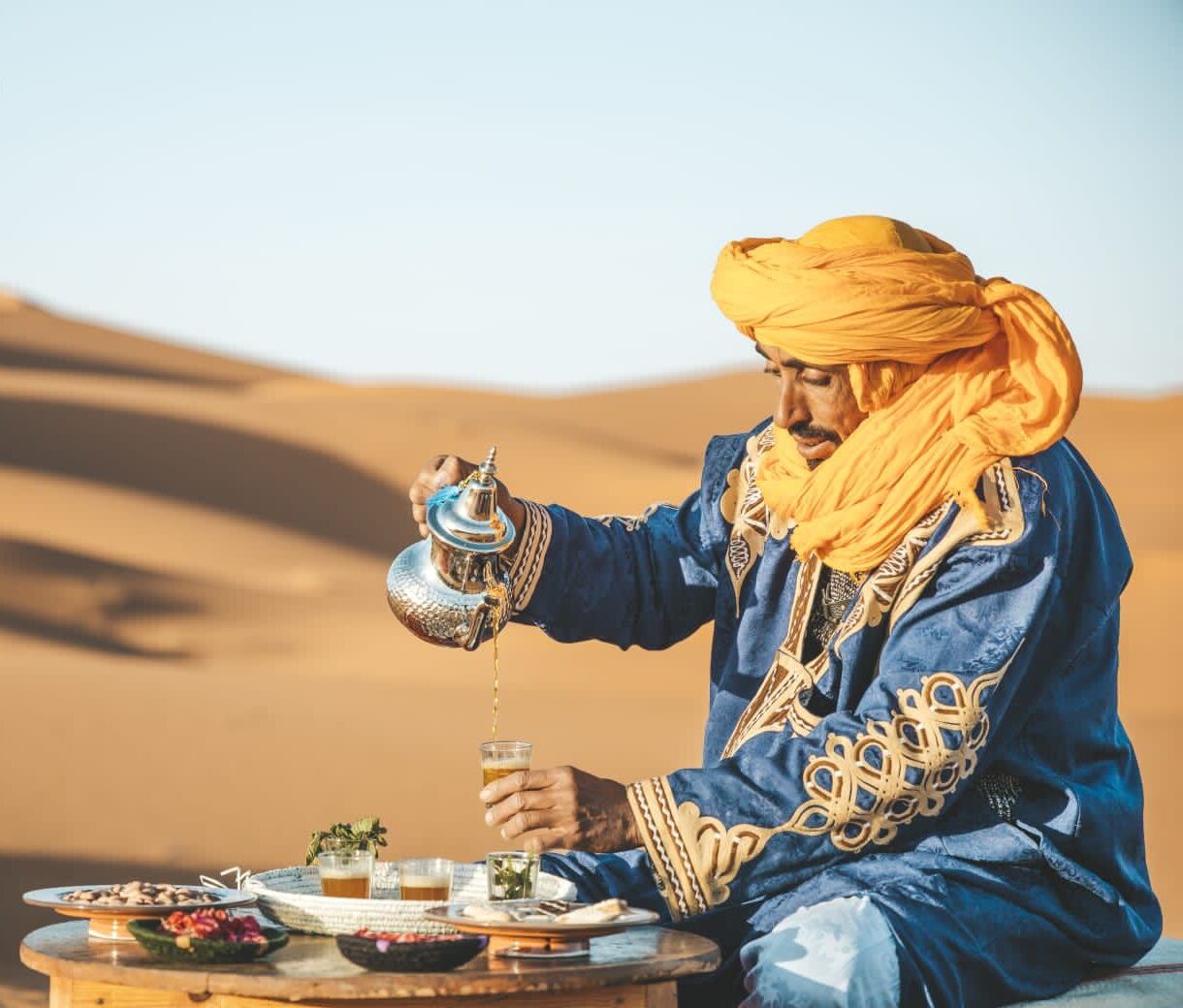
Mint tea ceremonies at a traditional camp transcend mere beverage service. The ritual of preparing and serving tea—often with homemade pastries like msemen (layered flatbread) or gazelle horns (crescent-shaped pastries filled with almond paste)—represents Berber hospitality and offers opportunities for genuine conversation and cultural exchange.
At Original Desert Camp, meal preparation often incorporates guest participation, allowing visitors to learn preparation techniques while building connections with their Berber hosts. These shared cooking experiences frequently become travelers' most cherished memories.
The Cultural Heart of Merzouga
Berber Heritage and Identity
The Berber people, or Amazigh as they call themselves in their own language, have inhabited North Africa for thousands of years. Their culture predates Arab arrival in the region by millennia. The Berber identity remains strong in Merzouga, where you'll hear Tamazight spoken alongside Arabic and French.
Berber culture emphasizes community, family, and resourcefulness. Traditional roles, while evolving, reflect these values. Women are often the custodians of cultural knowledge, crafting textiles using techniques unchanged for centuries. Men traditionally manage herds and navigate trade routes, though these roles have become more fluid in modern times. Understanding these cultural foundations enriches your camp experience, revealing the "why" behind daily practices.
The introduction of tourism has created interesting dynamics. Many Berber families have consciously incorporated tourism into their livelihoods while working hard to maintain cultural integrity. Young people often speak multiple languages and have formal education, representing a bridge between traditional and modern worlds. This generational transition adds depth to conversations with camp staff and hosts.
Traditional Crafts and Artisanal Skills
Visiting a Merzouga traditional camp offers access to living artisanal traditions. Berber women create intricate textiles through weaving—carpets, rugs, and blankets featuring geometric patterns with deep symbolic meaning. These aren't mass-produced items but expressions of individual creativity within cultural tradition.
Henna application represents another significant art form, particularly for celebrations and special occasions. In camps offering henna experiences, local artists apply elaborate designs using traditional paste made from henna plant leaves. The designs serve both decorative and symbolic purposes, representing wishes for beauty, protection, and fertility.
Pottery craftsmanship, jewelry making with silver and semi-precious stones, and leatherwork continue as practiced arts. Many camps facilitate meetings between guests and local artisans, providing context for understanding these crafts' cultural significance while supporting artisan livelihoods directly.
Daily Life at a Merzouga Heritage Camp
Morning Rituals and Desert Awakening
Sunrise in the Sahara ranks among Earth's most spectacular natural phenomena. A traditional day at Original Desert Camp or similar heritage camps typically begins before dawn, when guests gather for sunrise camel trekking or hiking to elevated dune vantage points. Arriving at a high dune as the sun breaks the horizon, casting golden light across undulating sand, creates moments of profound connection to the landscape.
After sunrise activities, breakfast typically features fresh bread, local honey, olives, and cheese, often prepared communally. This meal sets the tone for the day, providing necessary calories and hydration before heat intensifies.
Midday Rest and Heat Management
The extreme midday heat (even in winter, temperatures reach the 80s-90s) requires respect. Traditional camps structure the day around this reality, with morning activities, a substantial lunch, afternoon rest during peak heat, and evening activities resuming as temperatures cool.
This rhythm reflects how nomadic Berbers historically managed desert survival. Rather than fighting the climate, traditional approaches work with it. Camp guests who embrace this schedule—resting during afternoons, venturing out during cooler hours—find themselves adapting naturally to desert cycles. This adjustment often creates welcome mental space, as the enforced rest period allows disconnection from modern work and communication patterns.
Evening Community and Storytelling
As temperatures cool, camps come alive with evening activities. Berber musicians play traditional instruments—the oud (lute-like stringed instrument), the bendir (frame drum), and various percussion instruments. The music often accompanies spontaneous dancing, creating joyful, communal moments.
Around evening fires, storytelling traditions continue. Camp hosts or visiting storytellers share tales of desert history, nomadic adventures, ancient trade routes, and Berber legends. These narratives provide cultural context while entertaining. Many stories contain moral lessons or historical information crucial to understanding the region.
Stargazing from the Sahara represents another profound evening experience. Without light pollution, the Milky Way becomes so vivid it casts shadows. Camp staff often identify constellations, explain celestial navigation historically used by desert travelers, and share cultural interpretations of the night sky.
Participating in Berber Traditions
Camel Trekking: A Historical Perspective
Camels ("ships of the desert") remain central to Saharan culture, though modern life has reduced their practical importance. Camel trekking through desert dunes allows contemporary travelers to experience what caravan routes felt like—slow movement through vast landscapes, appreciation for the camel's remarkable desert adaptation, and perspective on pre-motorized travel.
Traditional camel treks through Merzouga vary in length from brief dune explorations to multi-day journeys emulating historical trade routes. Most heritage camps tailor treks to guest abilities and interests. The experience offers surprising insights: camels are intelligent, often gentle creatures with distinct personalities; the swaying motion induces meditative states; and the silence of the desert (broken only by camel footfalls and occasional bird calls) produces profound peace.
Nomadic Hospitality and Guest Customs
Berber hospitality is legendary and genuine. Visitors to a traditional Merzouga camp quickly notice the warmth and generosity extended to guests. This hospitality reflects deep cultural values but also represents an ancient practical tradition—in harsh desert environments, travelers were often dependent on strangers' kindness for survival.
Understanding hospitality customs enhances the experience. Accepting offered tea (even if you've already consumed several cups) shows respect. Dining with the family or community is a genuine honor that strengthens cultural exchange. Asking about family, showing interest in daily activities, and reciprocating generosity create meaningful interactions rather than transactional encounters.
Learning Traditional Skills
Many heritage camps offer opportunities to learn practical Berber skills. Bread baking in traditional ovens teaches patience and technique while producing delicious results. Carpet weaving demonstrates the mathematical complexity and artistic vision embedded in traditional patterns. Henna application reveals cultural aesthetics and symbolic meanings. Berber cooking classes provide recipes and techniques for preparation methods that have evolved to work with available ingredients and equipment.
These hands-on experiences create embodied learning—knowledge absorbed through doing rather than observing. Participants often develop genuine appreciation for the skill, time, and dedication traditional crafts require. This appreciation frequently translates into respect for artisans and desire to support their work through ethical purchasing.
Practical Considerations for Merzouga Camp Visits
Best Times to Visit
While Merzouga is accessible year-round, optimal visiting periods are October through April, when temperatures are manageable (40-75°F during the day) and nights are clear for stargazing. May through September brings extreme heat, though this period offers advantages including fewer tourists, lower prices, and the authentic experience of how Berbers manage summer conditions.
Specific cultural events influence visit timing. Islamic holidays create particular atmospheres and scheduling challenges. Checking these dates when planning ensures you understand potential impacts on camp activities and meal timing.
Preparing for the Physical and Cultural Experience
Physical preparation for Merzouga camps should include adequate hydration starting days before arrival and consistent hydration throughout your stay. Desert sun reflects intensely off sand, and the dry air evaporates perspiration quickly—dehydration can occur without obvious discomfort signals. Most camps provide abundant water, but guests must drink consistently.
Mentally preparing for cultural immersion enhances the experience significantly. Reading about Berber history, learning basic Arabic or Tamazight phrases, and examining your own cultural assumptions creates openness to genuine exchange. Approaching the culture with curiosity rather than judgment, recognizing that "different" doesn't mean "wrong," and remaining flexible when plans change (a cultural characteristic as much as a practical reality) fundamentally transforms your stay from tourism into cultural dialogue.
Practical preparation matters equally. Pack loose, lightweight clothing in neutral colors that respect local dress norms while keeping you cool. Bring high-SPF sunscreen, a wide-brimmed hat, and sunglasses—the desert sun's intensity surprises even experienced travelers. Comfortable walking shoes with grip are essential for navigating sand dunes, and a light scarf provides protection from wind and sun while offering cultural respect.
Finally, communicate your interests and any dietary requirements to Original Desert Camp before arrival. Whether you want to participate in traditional bread-making, learn about Berber astronomy under the stars, or simply experience quiet reflection in vast silence, the camp can tailor your experience when given advance notice.
Final Thoughts
Visiting Merzouga's desert camps isn't merely about checking off a travel destination—it's about stepping into a landscape and culture that have shaped human resilience and connection for millennia. The timing of your visit, combined with thoughtful physical and cultural preparation, determines whether you'll have a pleasant desert stay or a transformative experience that lingers long after you leave. Original Desert Camp awaits your arrival with authentic hospitality and the timeless magic of the Sahara.